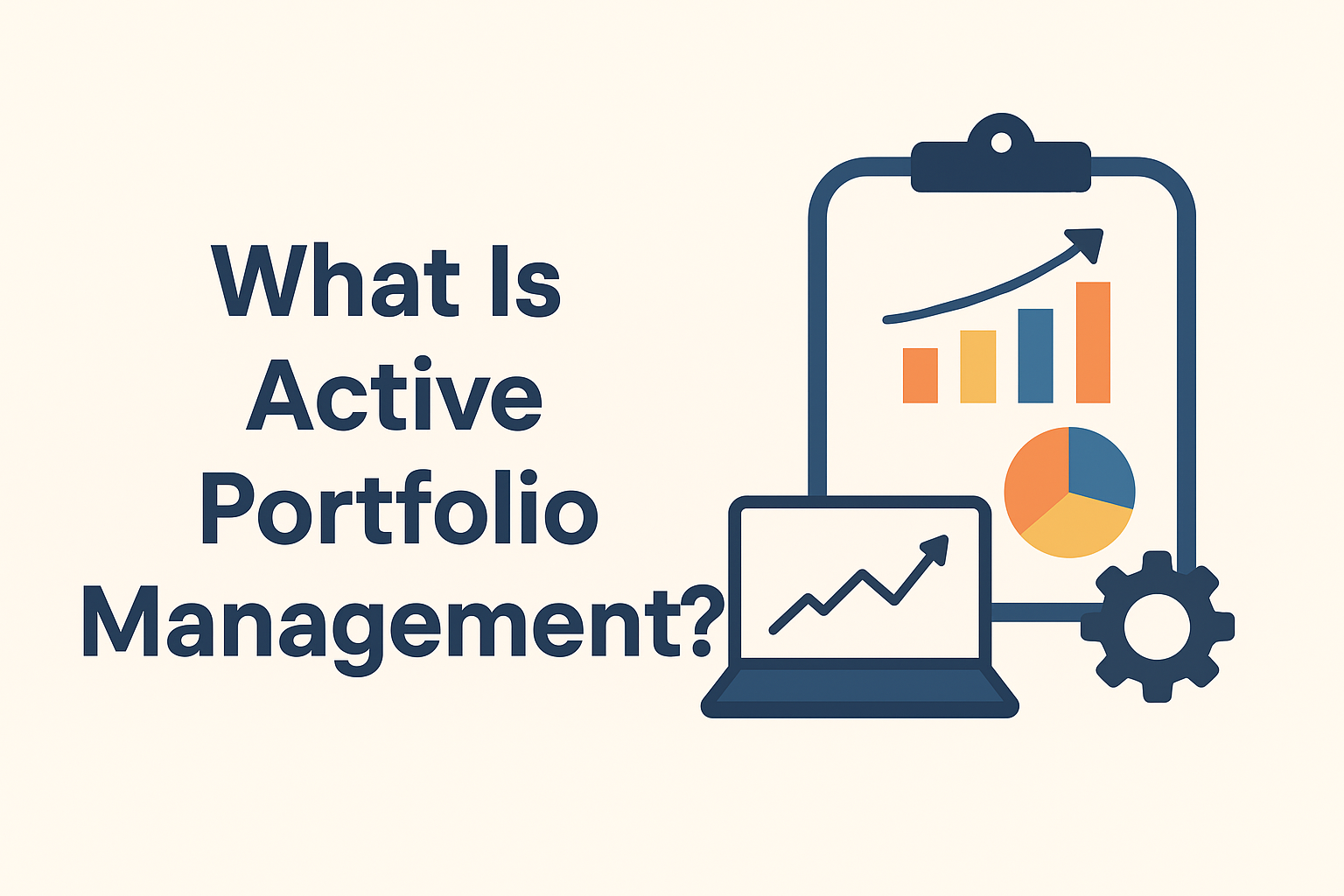
Active portfolio management is a strategy used by investors and fund managers to beat the market rather than simply match its performance. In simple terms, it means making frequent investment decisions—buying, selling, or reallocating assets—to take advantage of short-term price movements and market opportunities. Unlike passive management, which tracks an index and requires minimal monitoring, active management demands expertise, research, and continuous analysis of market trends. It involves studying company performance, macroeconomic indicators, financial statements, risk patterns, and even global developments that may impact asset prices.
Breaking it down further, the core aim of active portfolio management is to generate alpha, which refers to excess returns over a benchmark index. For example, if the NIFTY 50 gives a 10% return and your portfolio delivers 13%, the 3% is considered alpha—this is the value added by the active manager’s decisions. To achieve this, active managers use various tools like stock selection, market timing, sector rotation, and diversification strategies. Because the success of this approach depends heavily on market expertise, many investors prefer to rely on professional fund managers rather than managing their portfolios themselves.
How Does Active Portfolio Management Work?
Active portfolio management works through a systematic process where fund managers study market conditions, evaluate different asset classes, and adjust investments based on real-time data. The process typically begins with research—analyzing company fundamentals, monitoring industry growth, assessing competitive landscapes, and reviewing historical performance. Once the manager identifies potential opportunities, they allocate funds to assets that they believe will outperform in the near or medium term.
After the investments are made, the next phase is portfolio monitoring, where managers constantly track each asset’s performance. If the market shows signs of volatility or if a particular stock is underperforming, the manager may decide to buy more, sell part of the holdings, or exit the position completely. This ongoing decision-making is what makes active management dynamic and responsive. Unlike passive funds that stay invested in the same stocks until the index changes, active portfolios evolve frequently based on the market’s movement and the manager’s judgment.
Key Features of Active Portfolio Management
One of the standout features of active portfolio management is its flexibility. Managers are free to choose any stock, bond, commodity, or asset they believe will perform well. They are not restricted by index weightings, which allows them to focus on high-potential opportunities. Additionally, active management relies heavily on research, expert insights, and analytical tools. Managers study price patterns, earnings reports, global events, and even investor sentiment to develop profitable strategies.
Another important feature is the emphasis on risk management. Active managers do not simply chase high returns; they also identify potential risks and adjust the portfolio to minimize losses during market downturns. Techniques like stop-loss orders, hedging, diversification, and sector rotation help protect the portfolio. Because the market does not remain stable, this ability to adapt quickly gives active management an advantage—especially during volatile periods when passive funds may suffer without intervention.
Active Management vs. Passive Management
The debate between active and passive management has been ongoing for years. Passive management follows a benchmark index such as the S&P 500, NIFTY 50, or Sensex. Investments remain relatively fixed, and the goal is to match the market, not beat it. Passive funds are more affordable, easy to maintain, and suitable for long-term investors who want stable returns with low costs. However, they may struggle during economic downturns because they cannot exit underperforming stocks until the index changes.
On the other hand, active management seeks to outperform the market by taking advantage of short-term opportunities. Active managers rotate sectors, sell overvalued stocks, and invest in emerging opportunities. While active funds typically charge higher fees, they offer the possibility of generating significant alpha, especially in emerging markets where inefficiencies create profit opportunities. Ultimately, the choice between active and passive depends on an investor’s risk appetite, financial goals, and investment horizon.
Benefits of Active Portfolio Management
The biggest benefit of active portfolio management is its potential to deliver higher-than-market returns. When experienced managers use research-driven strategies, they can spot profitable trends before they become mainstream. Active management is particularly effective in volatile markets, where quick decisions help protect investments and capture new opportunities. This agility is not available in passive funds, which remain tied to index movements.
Another major advantage is customization. Active portfolios can be tailored to meet an investor’s goals, whether it is conservative growth, aggressive wealth creation, or sector-specific investing. Investors can choose themes like technology, green energy, healthcare, or mid-cap growth depending on their risk profile. In addition, active management involves ongoing monitoring, meaning portfolio adjustments happen immediately if market conditions shift. This real-time intervention helps reduce losses and maintain a healthy risk-return balance.
Risks and Challenges of Active Portfolio Management
While active portfolio management offers great potential, it also comes with certain risks. One of the major concerns is higher cost. Since active funds require professional analysis, research teams, and constant monitoring, the management fees are significantly higher compared to passive funds. These fees can eat into your profits, especially if the portfolio does not generate substantial alpha. Additionally, frequent buying and selling leads to higher transaction costs, which further reduces the net return.
Another challenge is the possibility of underperformance. Even expert managers can make wrong predictions in fast-changing markets. Economic events, political instability, and global crises can affect stock performance suddenly, making it difficult to maintain consistent gains. Since active management relies heavily on the manager’s skill, an inexperienced or overly aggressive manager can expose your portfolio to unnecessary risks. Investors must carefully evaluate the fund manager’s track record before choosing an active strategy.
Strategies Used in Active Portfolio Management
Active portfolio management uses a variety of strategies to generate alpha. One of the most common methods is stock picking, where managers select individual stocks based on financial metrics, market trends, and growth potential. They also use market timing, which involves entering or exiting positions based on expected price movements. While difficult, successful market timing can significantly boost returns in volatile markets.
Sector rotation is another popular strategy. Managers shift investments from one sector to another depending on economic cycles. For example, during economic recovery, sectors like banking and manufacturing may perform well, while during downturns, defensive sectors like healthcare and FMCG may offer stability. Managers also use quantitative analysis, algorithms, and technical indicators to support decision-making. These combined strategies allow active managers to stay ahead of the market and adjust quickly to changes.
Is Active Portfolio Management Right for You?
Active portfolio management can be a great choice if you are looking for above-average returns and are comfortable with short-term fluctuations. It is especially suitable for investors who want expert guidance, customized strategies, and ongoing monitoring of their portfolios. If you have specific financial goals—such as aggressive wealth creation, diversification beyond index funds, or exposure to high-growth sectors—active management may offer the right balance of flexibility and performance.
However, if you prefer stability, predictability, and lower costs, passive management may be a better fit. For beginners or those with limited market knowledge, active management provides the expertise needed to make informed decisions. Before choosing, evaluate your risk tolerance, investment horizon, and financial goals. Consulting with a financial advisor can help clarify whether active management aligns with your long-term wealth-building strategy.