Understanding the difference between project management and portfolio management is essential for organizations that want to grow strategically and operate efficiently. Although both disciplines sound similar and often overlap in business environments, they serve very different purposes and deliver different outcomes. Many professionals struggle to distinguish these two practices clearly, especially when they operate in organizations where both functions are still evolving. When you search online for answers, you may find definitions, charts, or technical explanations—yet the core question remains unanswered: which goal distinguishes project management and portfolio management?
To address this confusion, this blog will present a detailed explanation of both concepts and highlight the exact goal that differentiates them. We will break down how project management focuses on delivering individual project objectives, while portfolio management aims at selecting and managing a group of projects to achieve organizational strategic goals. By the end of this article, you will understand not only the distinguishing goal, but also how each function contributes to overall business success. This clarity is especially important for decision-makers, team leaders, and anyone responsible for balancing budgets, timelines, and resources across multiple initiatives.
What is Project Management?
Project management is the structured process of planning, executing, monitoring, and completing a project within defined constraints. These constraints typically include scope, time, cost, quality, and resources. A project manager is responsible for ensuring that every task is executed efficiently and that the team stays aligned with the project objectives. Whether you are constructing a building, designing a website, launching a marketing campaign, or implementing a new software solution, project management provides the framework to follow. It helps individuals and teams stay organized and focused while managing risks, addressing issues, and ensuring successful delivery.
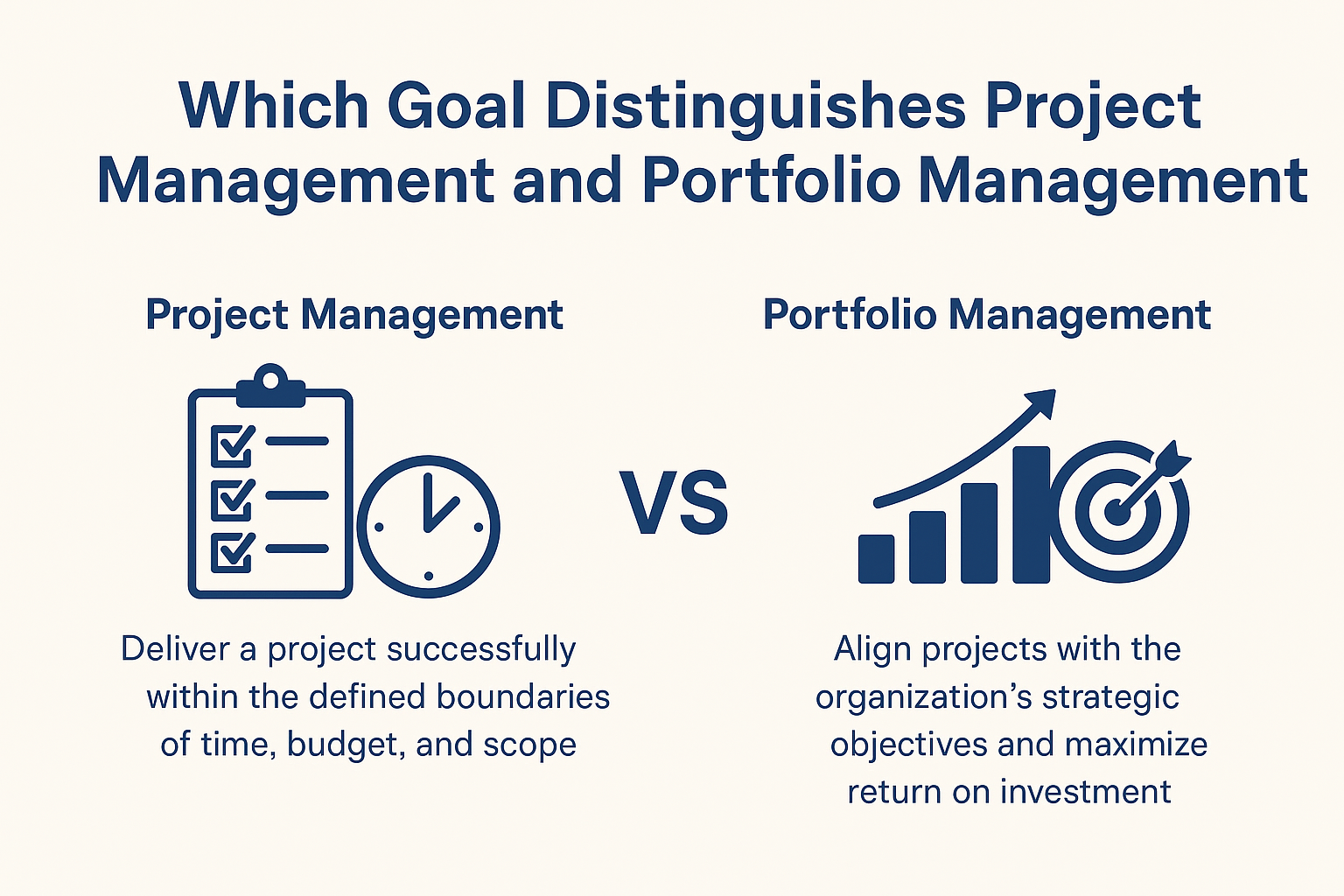
The core goal of project management is to deliver a project successfully within the defined boundaries of time, budget, and scope. This is the distinguishing purpose that makes project management unique. Everything a project manager does—from scheduling tasks to reporting progress—is aligned with this goal. In simple words, project management is about doing things right and ensuring that a specific project achieves its expected outcomes. It does not focus on whether the project aligns with long-term business strategies; instead, it ensures that the immediate project goal is met.
What is Portfolio Management?
Portfolio management, on the other hand, takes a broader and more strategic approach. Instead of dealing with a single project, portfolio management involves selecting, evaluating, prioritizing, and overseeing a group of projects or programs. These projects may differ in size, budget, timeline, or type, but they all contribute to a company’s long-term goals. A portfolio manager works closely with leadership teams to determine which projects should receive funding, which should be paused, and which might be discontinued. The purpose is not to manage day-to-day tasks but to make decisions that maximize overall business value.
The key goal of portfolio management is to align projects with the organization’s strategic objectives and maximize return on investment (ROI). This is the primary goal that distinguishes portfolio management from project management. Portfolio managers focus on choosing the right projects rather than managing how they are executed. They evaluate risks at a macro level, allocate resources strategically, and ensure that the company invests in initiatives that support long-term growth. In simple terms, portfolio management is about doing the right things, not just doing things right.
Which Goal Distinguishes Project Management and Portfolio Management?
The main goal that distinguishes these two disciplines is clear and straightforward. Project management focuses on achieving the specific objectives of a single project, such as delivering a product, service, or result within the agreed timeline, budget, and scope. In contrast, portfolio management focuses on selecting and prioritizing multiple projects to meet long-term organizational goals. It ensures that the company invests its resources wisely across all projects to maximize value and strategic impact.
To put it differently, project management answers the question: “How do we complete this project successfully?”, while portfolio management answers: “Which projects should we invest in to achieve our business vision?” This distinction is important for organizations that want to balance short-term execution with long-term planning. When companies confuse these two roles, they often struggle with inefficiencies, lack of direction, and poor resource allocation. Understanding the distinguishing goal helps teams maintain clarity and operate more effectively.
Why the Difference Matters for Organizations
The difference between project management and portfolio management is not just academic—it has practical business implications. When organizations fail to differentiate between the two, they may end up completing projects successfully but still missing strategic goals. For example, a project might be delivered perfectly on time but may not contribute significantly to long-term business growth. Without proper portfolio management, companies might continue investing in low-value projects simply because they have always done so, leading to wasted time, money, and resources.
When both functions operate clearly and effectively, companies experience smoother workflows, better decision-making, and improved efficiency. Project managers can focus on execution without worrying about long-term strategy, while portfolio managers guide the organization by selecting the most impactful initiatives. This balance results in optimized resource utilization, better risk management, and a stronger alignment between day-to-day work and organizational vision. Ultimately, the difference matters because it drives efficiency, profitability, and long-term success.
Project Management vs Portfolio Management: Key Differences
One of the simplest ways to understand the distinction is to compare the roles side by side. Project management deals with planning and executing tasks at a micro level, focusing on one project at a time. Portfolio management operates at a macro level, focusing on the collective impact of multiple projects. Their tools, decision-making approaches, and responsibilities differ accordingly. For instance, project managers use schedules, task lists, and risk logs, while portfolio managers use financial models, scoring criteria, and strategic roadmaps to make decisions.
Another major difference lies in decision-making authority. Project managers make operational decisions that impact the immediate project, such as assigning tasks or adjusting timelines. Portfolio managers make strategic decisions, such as determining which project gets funded or which initiative should be prioritized. While both roles are essential, they operate at different layers of an organization’s structure. Understanding these key differences helps companies build the right teams and set realistic expectations.
How Both Work Together in a Business Environment
Although project management and portfolio management have different goals, they are complementary and must work together. A portfolio manager might select a project because it aligns with long-term strategic goals, but it is the project manager who ensures that the project is executed successfully. This collaboration ensures that the company not only chooses the right project but also delivers it efficiently. Communication between these two roles is essential to maintain alignment between strategy and execution.
Organizations that manage both functions effectively benefit from smoother operations, better financial planning, and improved performance. While portfolio management provides the strategic direction, project management ensures that the strategy is converted into tangible results. When these two functions are aligned, companies experience fewer delays, fewer budget overruns, and more predictable outcomes. This synergy ultimately leads to consistent growth and long-term success.
Conclusion
In summary, the distinguishing goal between project management and portfolio management lies in their purpose. Project management aims to deliver a specific project successfully, while portfolio management aims to choose and prioritize the right projects to support long-term business strategy. Understanding this difference helps organizations function more efficiently and make better decisions. Whether you are a project manager, business owner, executive, or student, recognizing the difference ensures better clarity and improved planning.
By differentiating the two roles clearly, organizations can build a structure where strategy and execution go hand in hand. Project managers focus on quality delivery, while portfolio managers ensure that every project contributes meaningfully to overall business growth. Together, they create a balanced ecosystem that drives performance, supports innovation, and ensures long-term sustainability.