Introduction: Understanding Application Portfolio Management (APM)
Application Portfolio Management (APM) has become one of the most essential strategic practices for modern enterprises struggling with growing IT complexity. As organizations scale, their software environments become cluttered with duplicate tools, outdated applications, and systems that no longer support business goals. This is where APM steps in—to offer visibility, optimization, and control. So, what does application portfolio management provide that makes it so valuable? At its core, APM delivers clarity, reduces unnecessary costs, and aligns your application ecosystem with long-term organizational objectives.
The rise of cloud computing, digital transformation, and AI-driven processes has made application sprawl a common challenge. Companies often discover they are paying for software they don’t use, maintaining legacy systems that drain budgets, or relying on outdated tools that slow productivity. APM provides the framework to evaluate, prioritize, and streamline applications based on business value, risk, performance, and cost. In essence, it empowers decision-makers to keep what works, eliminate what doesn’t, and invest where necessary.
What Does Application Portfolio Management Provide? (The Core Benefits)
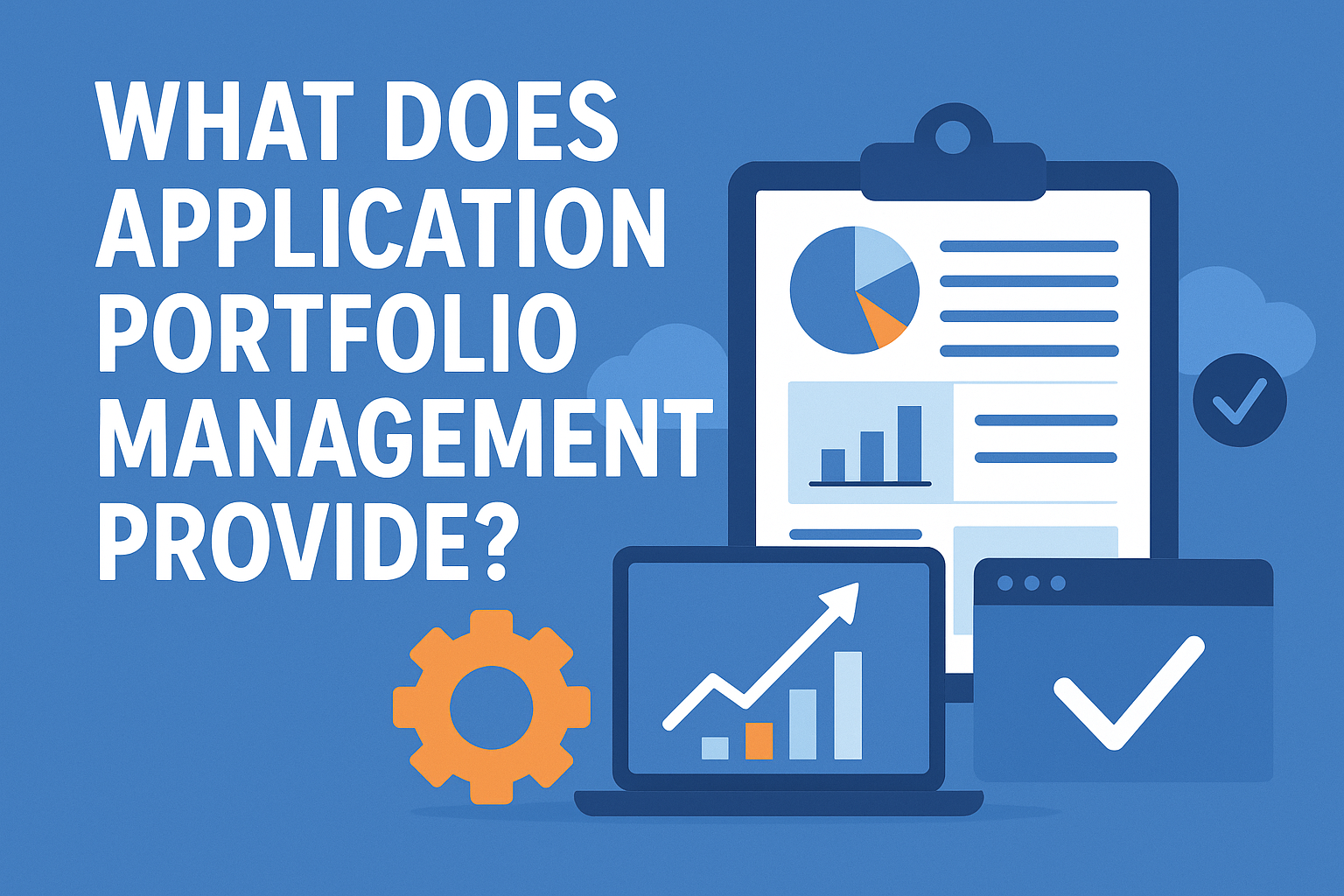
The most important question decision-makers ask is: What does application portfolio management provide that makes it indispensable? APM offers a centralized approach to analyzing an organization’s entire software portfolio. It provides transparency into application usage, ownership, cost drivers, technical health, and ROI. When done correctly, APM helps companies reduce redundancy, enhance performance, and minimize unnecessary spending. The result is a disciplined and data-driven IT environment where every application has a purpose.
Beyond visibility, APM provides control. It gives CIOs and IT teams the insights needed to make strategic decisions, such as migrating systems to the cloud, retiring outdated tools, or consolidating platforms. This leads to improved operational efficiency, reduced technology debt, and better resource allocation. In simple terms, APM transforms IT from a cost center into a value generator.
APM Provides Complete Visibility Into Your Technology Landscape
One of the most powerful capabilities of APM is visibility. Organizations often operate hundreds of applications without fully understanding how each one supports day-to-day operations. APM provides a clear inventory of every application, including its purpose, users, integrations, health, and associated costs. This transparency is essential for identifying hidden risks such as shadow IT, unsupported software, and duplicate tools performing the same function.
With this visibility, companies can detect inefficiencies and make informed decisions faster. For example, a business might discover that multiple departments use different tools for project management, driving costs unnecessarily higher. Visibility helps IT leaders centralize solutions, negotiate better licensing costs, and ensure consistency across the organization. It also helps uncover security gaps, compliance issues, or outdated systems that need immediate attention.
APM Helps Reduce IT Costs & Eliminate Redundancy
A major benefit organizations gain when understanding what does application portfolio management provide is cost reduction. Enterprises frequently overspend on applications—either through unused licenses, overlapping tools, or expensive legacy systems that require constant maintenance. APM identifies these cost leaks and enables companies to streamline their application portfolio for maximum efficiency.
Cost savings also come from rationalizing applications. Organizations can retire non-essential systems, merge similar tools, or shift toward cloud-based solutions that offer better scalability and lower operational costs. When IT budgets are optimized, funds are freed up for innovation, digital transformation initiatives, and technology upgrades that deliver real business value.
APM Improves Application Performance & Enhances Productivity
Poorly performing applications slow workflows, frustrate employees, and decrease productivity. APM provides performance insights to evaluate whether each application is meeting required service levels. If an application is outdated, resource-heavy, or causing frequent downtimes, APM highlights these issues with actionable data. This helps organizations focus on modernization, upgrades, or replacements where necessary.
With improved performance comes enhanced productivity. When employees have access to optimized, reliable, and efficient tools, they work faster and more effectively. APM ensures that the technology stack directly supports business operations rather than hindering them. The result is a smoother digital experience across the entire organization.
APM Strengthens Security & Compliance Across Applications
Security risks often arise from applications that lack regular updates, have weak integrations, or are no longer supported by vendors. APM helps identify vulnerable systems and categorize them based on risk levels. Understanding what does application portfolio management provide also includes the ability to monitor threats, security gaps, and compliance violations before they escalate into larger issues.
Furthermore, APM ensures that all applications adhere to industry-specific standards such as GDPR, HIPAA, ISO, or PCI DSS. Compliance becomes easier when organizations maintain a complete and accurate record of their software environment. This reduces audit times, increases trust with stakeholders, and prevents penalties associated with non-compliance.
APM Supports Better Strategic Decision-Making
Application Portfolio Management plays a crucial role in aligning IT decisions with long-term business strategies. With complete insights into cost, performance, usage, and risk, leaders can make data-backed decisions regarding upgrades, integrations, cloud migrations, or process automation. This ensures that technology investments always support organizational goals.
Additionally, APM provides valuable analytics that highlight trends, potential ROI, and areas of improvement. Whether a company is preparing for digital transformation or restructuring operations, APM acts as the backbone that guides decision-making. It helps minimize guesswork and ensures every application contributes meaningfully to the company’s growth.
APM Helps Reduce Technical Debt & Complexity
Technical debt builds up when organizations rely on outdated applications, unsupported software, or quick fixes instead of long-term solutions. Over time, this leads to increased maintenance costs, security issues, and operational inefficiencies. One of the key answers to what does application portfolio management provide is reducing technical debt. APM identifies technologies that need modernization, consolidation, or elimination.
Reducing complexity also means simplifying workflows and integrations. When systems are streamlined, IT teams spend less time troubleshooting and more time focusing on innovation. This helps businesses stay agile and competitive in fast-changing digital environments.
APM Enables Better Cloud Migration Planning
Cloud migration is one of the biggest priorities for organizations today. However, not every application is cloud-ready. APM evaluates each system’s architecture, dependencies, security requirements, and modernization needs. This helps companies determine which applications should be migrated, retired, or re-engineered before moving to the cloud.
By providing a structured roadmap, APM reduces risks associated with cloud adoption, such as data loss, downtime, or compatibility issues. It ensures smoother transitions and maximizes the benefits of cloud scalability, cost flexibility, and performance improvements.
Conclusion: Why APM Is Essential for Every Growing Business
In summary, if you are still wondering what does application portfolio management provide, the answer is clear: it delivers visibility, cost optimization, risk reduction, strategic alignment, and long-term technological efficiency. APM empowers organizations to make smart decisions that support growth, improve productivity, and create a more secure digital environment.
As businesses navigate an increasingly digital world, managing application sprawl is no longer optional—it is a necessity. Application Portfolio Management ensures that every tool your organization uses delivers measurable value and supports your mission. Investing in APM today sets the foundation for a more agile, innovative, and future-ready enterprise.