In the world of business execution, people often confuse project management with portfolio management, even though both play very different roles in helping organizations achieve their goals. Project management focuses on completing individual projects successfully, whereas portfolio management looks at all projects together from a strategic point of view. When companies scale or start working on multiple initiatives at once, understanding the difference between the two becomes extremely important. In this blog, you will learn what each term means, how they differ, why the difference matters, and how organizations use both to grow effectively.
Before we dive deeper, it’s important to understand that project management is operational while portfolio management is strategic. A project manager ensures a single project gets delivered on time, within budget, and according to scope. A portfolio manager, on the other hand, ensures that all projects collectively align with the company’s long-term objectives. This simple distinction sets the foundation for everything else.
What Is Project Management?
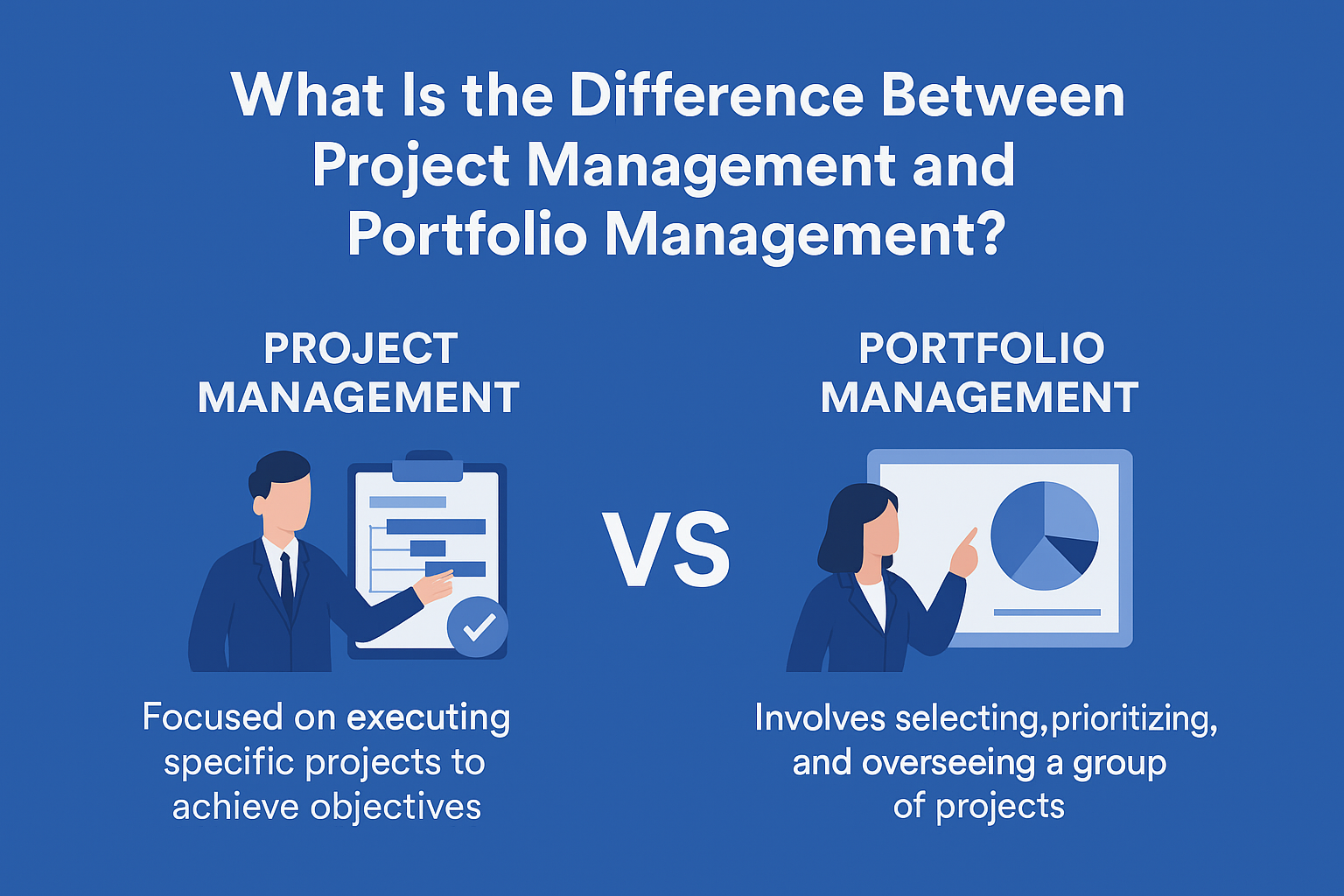
Project management is the structured process of planning, organizing, and managing tasks to achieve a specific objective. It involves breaking down a project into phases like initiation, planning, execution, monitoring, and closure. The job of a project manager is to coordinate people, resources, deadlines, and budgets to ensure the project finishes successfully. Tools like Gantt charts, agile boards, and project scheduling software help maintain workflow and reduce risks. Ultimately, project management is concerned with how a specific project gets done and what steps are needed to reach the final goal.
Another major responsibility of project management is communication and risk handling. A project manager must regularly update stakeholders, resolve bottlenecks, manage team expectations, and ensure that the project does not deviate from its initial scope. If changes occur—which they often do—the project manager modifies the plan, reallocates resources, or adjusts timelines. This operational, day-to-day management of tasks and people is what makes project management essential in delivering any single project successfully.
What Is Portfolio Management?
Portfolio management is a higher-level strategic function that involves selecting, prioritizing, and overseeing a group of projects and programs within an organization. Instead of managing one project at a time, a portfolio manager looks at the entire set of projects to determine which ones are worth pursuing. The goal is not just to finish projects on time but to ensure they collectively support the company’s long-term objectives, financial goals, and vision. Portfolio management focuses on decision-making, investment analysis, resource distribution, and balancing risks across multiple projects.
A portfolio manager continuously evaluates performance, budget utilization, and expected ROI to decide whether projects should continue, pause, or stop. Sometimes businesses have limited resources, so portfolio management helps choose the right mix of projects that provide maximum value. It also ensures alignment with business strategy—for example, prioritizing digital transformation projects if the company wants to adopt new technologies. In summary, portfolio management influences the overall direction of the business by deciding which projects make sense.
Key Differences Between Project Management and Portfolio Management
The major difference between project management and portfolio management lies in their purpose. Project management is about delivering a project successfully, while portfolio management is about choosing the right projects. Project managers focus on tasks, execution, and timelines, whereas portfolio managers focus on business goals, financial value, and risk distribution. This difference in purpose shapes their responsibilities, tools, and outcomes. For example, a project manager uses scheduling tools, while a portfolio manager relies on analysis dashboards and strategic planning frameworks.
Another major difference is the level of authority and scope. A project manager has authority within a single project, whereas a portfolio manager has control over multiple projects and sometimes entire business units. Portfolio management looks at the long-term picture—deciding what will bring the most value—while project management works on short-term execution. Both are connected, but their functions operate at different levels. Project management ensures efficiency; portfolio management ensures strategic success.
Roles and Responsibilities in Project vs Portfolio Management
A project manager’s role centers around planning, execution, team leadership, and risk control. They ensure tasks are completed, quality standards are met, and the team collaborates effectively. Their primary focus is stakeholder communication, timeline management, cost control, and ensuring the project delivers the expected output. They are deeply involved in the daily activities and challenges of the project, adjusting plans as needed.
A portfolio manager, on the other hand, is responsible for strategic alignment and value optimization. They analyze multiple projects to ensure resources are used efficiently and high-value projects get priority. They evaluate proposed projects, approve or reject ideas, and identify risks across the entire portfolio. Their role is more strategic, involving collaboration with executives, financial planners, department heads, and stakeholders to ensure that chosen projects drive business growth.
Why Organizations Need Both Project and Portfolio Management
An organization needs project management to execute individual projects efficiently and portfolio management to ensure they are investing in the right projects. If a company only focuses on project management, it may complete projects that do not contribute to any meaningful growth. Similarly, if it only focuses on portfolio management without execution discipline, even great ideas may fail due to poor implementation. The two systems support each other and create balance.
Using both together helps companies manage resources better, reduce unnecessary spending, and identify which projects offer the highest returns. With portfolio management, businesses can stop low-performing projects early and reallocate resources to high-priority ones. Meanwhile, project management ensures that once a project is approved, it is executed with proper planning and control. This dual approach results in higher efficiency, lower risk, and better achievement of business goals.
How Project and Portfolio Management Work Together
Project and portfolio management work together by connecting execution to strategy. The portfolio manager chooses projects based on long-term goals, and the project manager ensures those projects are carried out successfully. Portfolio managers provide direction on priorities, while project managers provide insights from the ground to help refine strategies. This relationship keeps the organization aligned and adaptable.
Clear communication between both roles ensures that resources are allocated correctly and expectations are realistic. Portfolio managers need detailed reports from project managers to assess performance, budget usage, and potential risks. Based on these insights, they make decisions such as accelerating a project, reallocating funds, or adjusting future plans. When done well, this collaboration strengthens overall organizational performance.
Conclusion
Understanding what is the difference between project management and portfolio management helps businesses operate more effectively in both strategic and execution levels. Project management ensures smooth delivery of individual projects, while portfolio management ensures that the chosen projects support business priorities. Both roles complement each other and together create a structured approach to achieving goals.
Whether you are a business owner, project manager, or someone studying management, knowing the contrast between project management and portfolio management will help you make smarter decisions. When organizations use both roles effectively, they gain better control over resources, boost ROI, reduce risks, and stay competitive in a fast-evolving marketplace.