Introduction: Why Integration Matters in Private Equity
Private equity firms handle an enormous amount of data—from investor relations and deal flow to fund performance and ongoing portfolio monitoring. Because these systems often operate in silos, many firms waste time switching between tools or manually consolidating data. This raises an important question: Can you integrate private equity CRM with portfolio management capabilities? The short answer is yes, and doing so can completely transform operational efficiency. Integrating both systems ensures that teams can manage deals, track investor activity, analyze fund performance, and monitor portfolio companies from a single source of truth. It simplifies decision-making and keeps everyone aligned.
The need for integration has grown as private equity firms scale operations and manage greater volumes of complex data. A CRM alone cannot handle real-time performance tracking, modeling, or risk analysis, and a portfolio management tool cannot manage fundraising pipelines or investor engagement. When you bring both systems together, you eliminate data duplication, minimize errors, and strengthen compliance. This blog explores how integration works, its benefits, key features to expect, and the best solutions that support this modern private equity workflow.
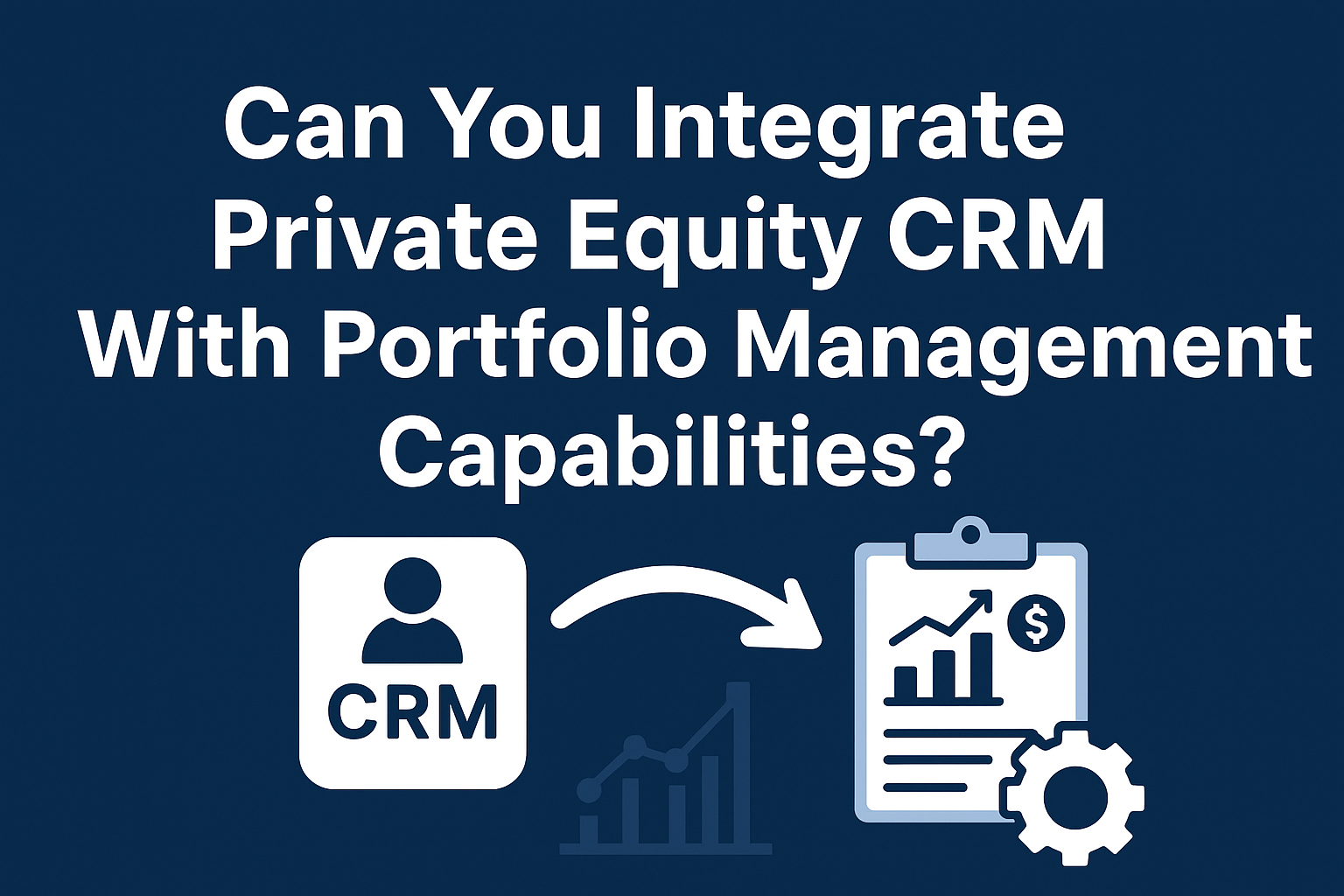
Can You Integrate Private Equity CRM With Portfolio Management Capabilities?
So, can you integrate private equity CRM with portfolio management capabilities? Absolutely—and this integration has become standard practice among top-tier firms. CRM systems built for private equity are designed to centralize contacts, deals, and fundraising activity. When integrated with portfolio management software, they offer a seamless connection between ongoing deal management and post-investment operations. This allows firms to track a deal from initial conversation to final exit within a single ecosystem. The integration also supports deeper insights because financial, operational, and performance data flows automatically between platforms.
Today’s advanced CRM tools come with flexible APIs and pre-built connectors that make integration easier than ever. Whether you use a platform like Salesforce, Microsoft Dynamics, HubSpot, or a PE-focused CRM like DealCloud or Altvia, you can connect it to your portfolio management solution. This unified environment enhances visibility, boosts communication across teams, and produces a more data-driven investment strategy. In short, integration isn’t just possible—it’s becoming a competitive necessity.
Benefits of Integrating Private Equity CRM With Portfolio Management Tools
Integrating a private equity CRM with portfolio management capabilities brings several operational advantages. First, it enables firms to streamline workflows by eliminating repetitive tasks such as data entry and manual reporting. Since all deal and portfolio data lives within a centralized system, teams can collaborate more efficiently. Fund managers, analysts, and investor relations professionals can quickly access relevant information without navigating multiple dashboards. This automation enhances data accuracy and gives teams more time to focus on strategic decision-making rather than administrative tasks.
Another major advantage is improved investor transparency. Integrated systems allow firms to quickly generate performance reports, capital call summaries, valuation updates, and LP communications using real-time data. This not only boosts investor confidence but also helps firms comply with increasingly strict regulatory requirements. With advanced analytics available across both deal pipelines and portfolio performance, firms can identify risks earlier and capitalize on opportunities faster. Ultimately, the integration empowers firms to operate smarter, scale faster, and maintain a competitive edge.
Key Features to Look For When Integrating Both Systems
When deciding whether you can integrate private equity CRM with portfolio management capabilities, it’s important to identify the features that matter most. Look for CRM platforms that offer API flexibility, allowing them to connect with third-party systems without restrictions. A robust CRM should support custom fields, workflows, and automation that align with your fund structure and deal lifecycle. You’ll also want strong security features—such as role-based access, encryption, and audit logs—to ensure confidential investor and financial data remains protected during integration.
On the portfolio management side, your system should provide real-time dashboards, performance metrics, and reporting tools. Key capabilities include cash flow forecasting, valuation tracking, KPI monitoring, and scenario modeling. Ensure that the platform supports data ingestion from multiple sources and automatically syncs updates across systems. When both solutions can exchange information smoothly, you gain a clearer picture of fund performance from pre-investment to exit. Firms that prioritize these features enjoy a smoother integration and a more complete data environment.
How Integration Works: API, Automation, and Data Sync
The process of integrating CRM and portfolio management systems typically begins with establishing an API connection. APIs act as “digital bridges” that allow both systems to communicate securely and share data in real time. Once the API connection is configured, firms can determine what data should flow between the systems—such as deal status, financial metrics, investor profiles, and reporting fields. Automation rules can be applied to trigger updates, eliminating the need for manual syncing. For example, when a deal moves from pipeline to active investment, the portfolio management tool can automatically start tracking KPIs.
Data sync is another essential piece of the integration. Most modern systems offer real-time or scheduled syncing so that both platforms remain aligned. This helps teams avoid inconsistencies and ensures that performance reports always reflect the latest numbers. Additionally, many PE-focused platforms offer built-in connectors that reduce the technical workload. Whether you work with internal IT support or a third-party integrator, the setup process is generally fast, secure, and scalable as your operations grow.
Challenges You May Face During Integration
Although integrating a private equity CRM with portfolio management capabilities is highly beneficial, it does come with potential challenges. One common issue is data mapping. Firms must ensure that fields within both systems match correctly—otherwise, syncing errors may occur. In addition, legacy systems or spreadsheets may contain outdated or inconsistent information that needs cleaning before integration. This preparation phase can take time, but it pays off by creating a more accurate and reliable data environment.
Another challenge is user adoption. Even the best system fails without proper user training. Firms often underestimate how important it is to educate teams on new workflows, dashboards, and automation rules. Without this, users may avoid the system or revert to manual processes. A successful integration requires clear onboarding, proper documentation, and ongoing support. Once teams understand the value, adoption becomes natural and productivity improves.
Best Tools That Support CRM and Portfolio Management Integration
Several platforms are designed specifically for private equity firms seeking seamless integration between CRM and portfolio management. DealCloud is one of the most widely used tools, offering robust CRM capabilities combined with built-in portfolio monitoring. It provides a unified workspace for deal flow, investor relations, and ongoing performance tracking. Altvia, based on Salesforce, is another strong choice with deep customization and reporting capabilities. Its platform includes LP portals, fundraising tools, and powerful integrations.
Other solutions such as Dynamo, Navatar, and Backstop also support CRM and portfolio management workflows. Some firms prefer using Salesforce or HubSpot as their CRM and connecting them to separate portfolio management tools such as Allvue, eFront, or Carta. The best choice depends on your fund size, operational structure, and reporting requirements. Regardless of the tool, the key is ensuring strong API support and real-time syncing features.
Conclusion: The Future of Private Equity Data Integration
So, can you integrate private equity CRM with portfolio management capabilities? Yes—and it’s become essential for firms that want to modernize and scale. Integrated systems offer better data visibility, enhanced investor relationships, and stronger decision-making capabilities. By unifying deal flow, communications, and portfolio oversight, private equity firms can operate more efficiently and confidently in a competitive market.
As the industry becomes increasingly digital, firms that adopt integrated platforms will continue to outperform those relying on disconnected tools. Whether you’re a boutique firm or a large investment group, integration helps build a stronger, more data-driven foundation for long-term success. It’s no longer a question of if you should integrate—but how soon you can implement it.