Introduction: Why Managing Your Retirement Portfolio Matters
Managing your retirement portfolio is one of the most important financial responsibilities you will ever undertake. As you move closer to retirement, your priorities shift from wealth accumulation to wealth preservation, income stability, and long-term security. Understanding how to manage retirement portfolio effectively helps you handle market fluctuations, maintain steady cash flow, and protect your savings from inflation. Many people assume that building a retirement corpus is enough, but the real challenge begins once you need to manage it systematically.
The goal of managing your retirement portfolio is not just to grow your wealth but to make it last for the rest of your life. This requires a balanced investment strategy, risk management, periodic reviews, and a strong understanding of your financial needs. Whether you’re approaching retirement or already retired, knowing how to manage retirement portfolio will help you reduce stress and make confident financial decisions. Let’s dive deep into the strategies, tips, and practices that will help you master retirement planning.
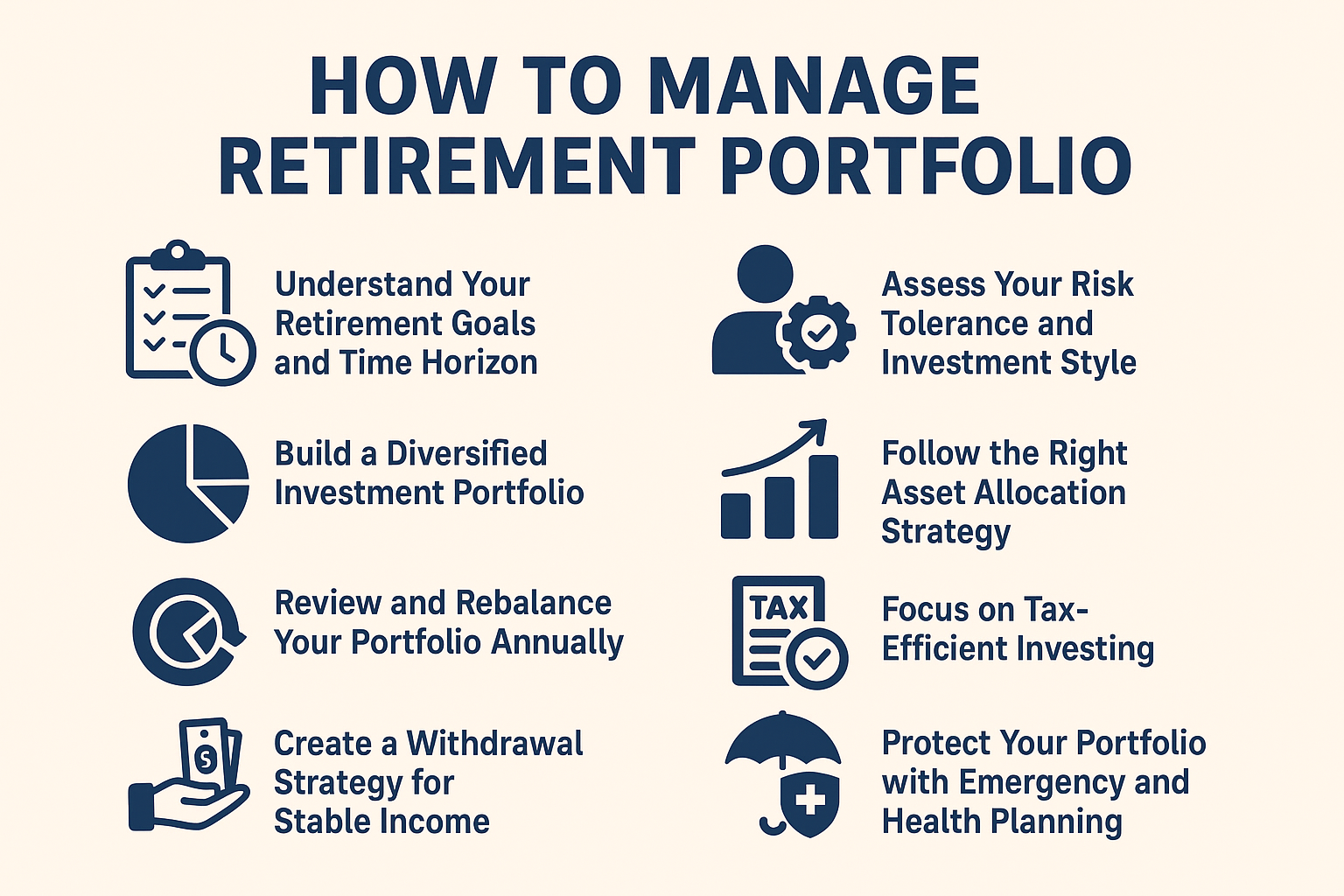
1. Understand Your Retirement Goals and Time Horizon
Before learning how to manage retirement portfolio effectively, you must first be clear about your retirement goals. These include understanding your expected monthly expenses, lifestyle choices, potential medical costs, and travel or leisure plans. Your time horizon—meaning the number of years left until you retire—plays a major role in determining your investment choices. Someone with 20 years until retirement will invest very differently than someone retiring in two years.
Once you estimate your retirement timeline, you can align your portfolio with your risk capacity. For example, a longer time horizon allows you to take a slightly higher risk for better returns, while a shorter horizon requires capital protection. Being clear about your goals is the foundation of how to manage retirement portfolio successfully. When you know what you are planning for, each financial step becomes easier, more organised, and tailored to your future needs.
2. Assess Your Risk Tolerance and Investment Style
Risk tolerance refers to how much financial risk you are comfortable taking. It is one of the key elements in understanding how to manage retirement portfolio properly. Some people prefer stable, low-risk investments, while others can handle moderate to high volatility. Your risk tolerance usually depends on age, income stability, financial responsibilities, and personal mindset. Taking a risk profile assessment can help you understand whether you are conservative, moderate, or aggressive.
Once you recognise your risk category, you can choose the right investment mix. Conservative investors may prefer bonds, fixed deposits, and dividend stocks. Moderate investors may go for balanced mutual funds, index funds, or a mix of equity and debt. Aggressive investors may consider equity-heavy portfolios for higher returns. Matching your investments with your risk capacity ensures that you remain comfortable with market fluctuations and stay committed to your long-term retirement strategy.
3. Build a Diversified Investment Portfolio
Diversification is the golden rule of how to manage retirement portfolio, ensuring that your money is spread across different asset classes to minimise risk. A well-diversified portfolio typically includes equity, debt, real estate, gold, and cash reserves. Each asset class behaves differently in various market conditions, helping protect your overall wealth even if one category underperforms. This reduces the chances of major losses and provides steady, reliable long-term growth.
Within diversification, it’s also important to spread risk inside each asset class. For example, in equities, you should include large-cap, mid-cap, and international stocks or funds. In debt, consider a combination of government bonds, corporate bonds, and fixed-income instruments. A diversified approach helps balance growth and stability, making it easier to manage your retirement portfolio without worrying about unpredictable market movements.
4. Follow the Right Asset Allocation Strategy
Asset allocation refers to how you divide your investments across equity, debt, and other assets. It is the most crucial component when learning how to manage retirement portfolio at different life stages. Younger investors typically maintain higher equity exposure because they have time to recover from market downturns. As you approach retirement, you gradually shift towards safer assets like bonds and fixed-income options to protect your savings.
A popular strategy is the “100 minus your age” rule, which suggests keeping the remaining percentage in equity after subtracting your age from 100. For example, a 40-year-old may invest 60% in equity. However, this is just a guideline and should be adjusted based on personal risk tolerance and financial goals. Good asset allocation gives both stability and growth, ensuring your retirement fund lasts throughout your life.
5. Review and Rebalance Your Portfolio Annually
Learning how to manage retirement portfolio also involves consistent monitoring. Over time, your investments may drift away from the original allocation due to market performance. For example, if equity performs very well, it may become a larger portion of your portfolio than intended. This exposes you to higher risk, especially as you near retirement. Rebalancing helps restore your portfolio to its ideal mix by buying or selling investments strategically.
Most financial experts recommend reviewing and rebalancing your portfolio once or twice a year. This discipline keeps your investments aligned with your goals and risk tolerance. It also gives you the opportunity to eliminate underperforming assets and replace them with better options. With regular rebalancing, you can maintain control over your retirement savings and avoid unexpected financial surprises later in life.
6. Focus on Tax-Efficient Investing
A major part of learning how to manage retirement portfolio is understanding taxes. Taxes can significantly reduce your returns if you don’t plan smartly. Opting for tax-efficient investment options helps maximise your income during retirement. For example, long-term equity gains often come with favorable tax rates, while some retirement accounts offer deductions or tax-free withdrawals depending on the country or plan.
Tax planning is equally important when withdrawing funds during retirement. Organising your withdrawals from pensions, fixed-income investments, and mutual funds in a tax-efficient manner ensures you retain more of your hard-earned money. Consulting with a tax planner can help you choose the right combination of tax-saving tools, keeping your retirement funds secure and optimised for long-term use.
7. Create a Withdrawal Strategy for Stable Income
Managing your retirement portfolio is not only about investing—it’s also about knowing how to withdraw money safely. A good withdrawal strategy ensures your savings last for your entire retirement. One popular method is the 4% withdrawal rule, where you withdraw 4% of your corpus annually while keeping the rest invested. This helps maintain a sustainable income without draining your funds too quickly.
However, withdrawal strategies must be personalised. You should consider inflation, medical expenses, market performance, and emergency needs. Some years you may need to withdraw more, while in other years you may withdraw less. A flexible approach helps keep your portfolio healthy. Creating a structured withdrawal plan is a key step in understanding how to manage retirement portfolio responsibly and confidently.
8. Protect Your Portfolio with Emergency and Health Planning
No matter how well you manage your retirement portfolio, unexpected events can disrupt your financial stability. That’s why emergency planning is essential. Setting aside 6–12 months of expenses ensures you don’t need to withdraw from long-term investments during market downturns. This protects your portfolio from unnecessary losses and keeps your investment strategy intact.
Similarly, health costs often increase in retirement. Investing in health insurance or medical funds is a crucial part of retirement planning. This reduces the risk of medical expenses draining your retirement corpus. Taking preventive steps like emergency funds and health planning ensures your portfolio remains stable, protected, and capable of supporting you even during unexpected situations.
Conclusion: The Smart Way to Manage a Retirement Portfolio
Learning how to manage retirement portfolio is an ongoing journey that requires planning, discipline, and periodic adjustments. By setting clear goals, understanding your risk tolerance, diversifying investments, and following the right asset allocation strategy, you lay a strong foundation for financial security. Regular reviews, tax-efficient practices, and a thoughtful withdrawal plan further strengthen your retirement readiness.
The earlier you start planning, the easier it becomes to build and manage a reliable retirement portfolio. Even if you begin late, consistent improvements can still make a big difference. The key is to stay informed, be flexible, and make decisions based on long-term well-being. By applying the right strategies, you can enjoy a peaceful, financially secure retirement without stress.