Introduction to Non-Discretionary Portfolio Management
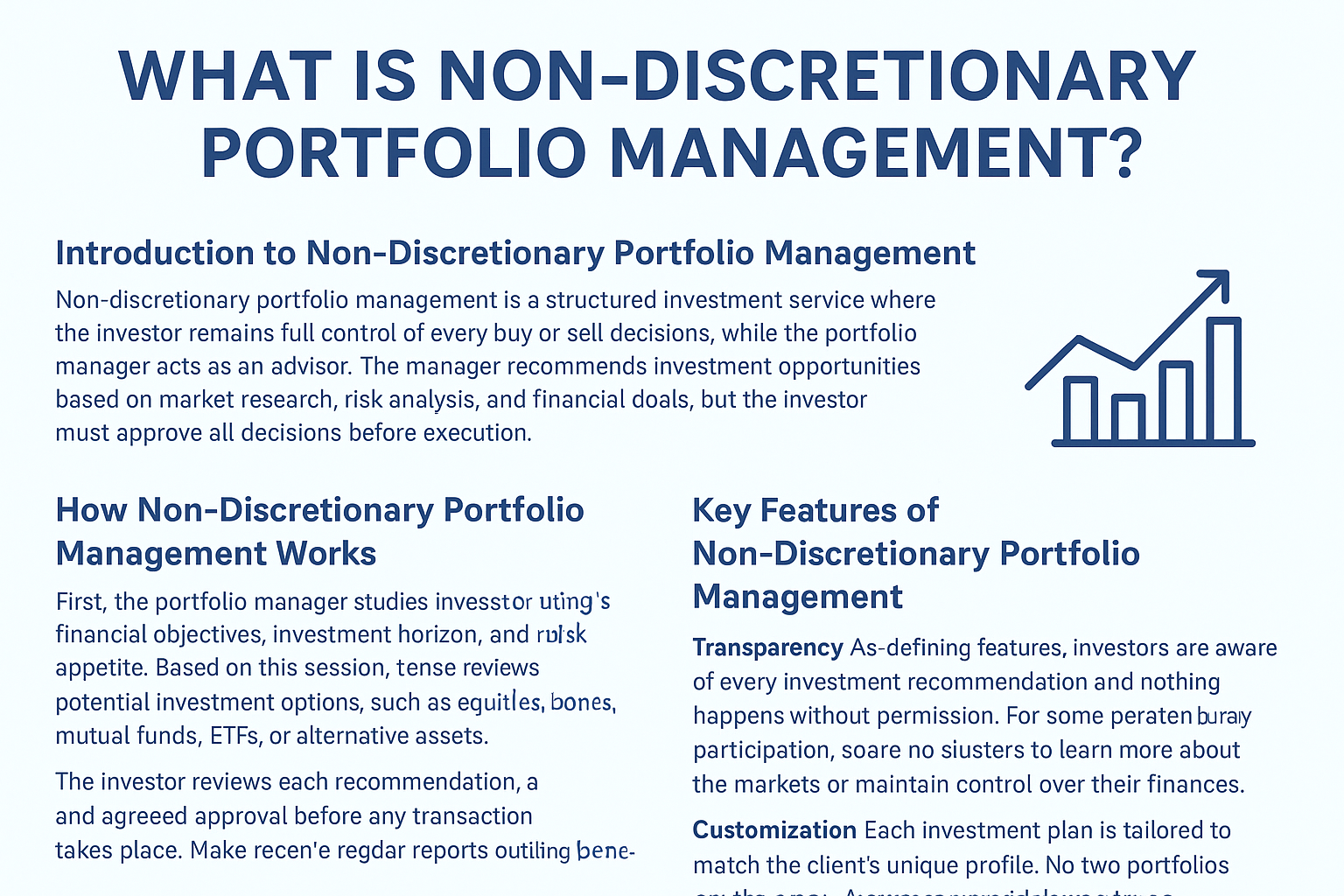
Non-discretionary portfolio management is a structured investment service where the investor remains in full control of every buy or sell decision, while the portfolio manager acts as an advisor. In this model, the manager recommends investment opportunities based on market research, risk analysis, and financial goals, but the investor must approve all decisions before execution. This approach empowers individuals who want expert guidance yet prefer to retain authority over their capital. It is widely used by investors who seek transparency, involvement, and customized advice without giving away decision-making rights.
At its core, non-discretionary portfolio management is different from discretionary management, where professionals have the freedom to execute trades without prior approval. Here, the manager becomes more of a consultant, ensuring the investor understands each strategy before acting. This style is ideal for people with moderate market knowledge who want a balanced combination of expert insight and personal control. Through this model, investors can align their portfolios with their personal values, risk tolerance, and long-term financial plans.
How Non-Discretionary Portfolio Management Works
The working structure of non-discretionary portfolio management revolves around collaboration. First, the portfolio manager studies the investor’s financial objectives, investment horizon, and risk appetite. Based on this evaluation, the manager identifies potential investment options such as equities, bonds, mutual funds, ETFs, or alternative assets. These suggestions are communicated to the investor, typically through calls, emails, or investment dashboards. The investor then reviews each recommendation, asks questions if necessary, and provides approval before any transaction takes place.
Once approval is given, the manager proceeds with execution while maintaining detailed records of the transaction. The investor receives regular reports outlining performance, portfolio allocation, and any market updates that may affect future decisions. This ensures that the investor remains consistently involved and aware of all activities. Non-discretionary management basically works like a guided investment journey where the expert provides the map, but the investor chooses the route.
Key Features of Non-Discretionary Portfolio Management
One of the defining features of non-discretionary portfolio management is transparency. Investors are aware of every investment recommendation, and nothing happens without their permission. This level of transparency builds trust and reduces the risk of unwanted transactions. The model also encourages active investor participation, making it suitable for those who want to learn more about the markets or maintain control over their finances. Investors receive continuous advice, research insights, and market analysis while still deciding which direction their portfolio takes.
Another important feature is customization. Each investment plan is tailored to match the client’s unique profile—no two portfolios are the same. The manager focuses on optimizing returns while minimizing risks based on individual preferences. Furthermore, non-discretionary services often include periodic portfolio reviews where investors and managers discuss performance updates and potential adjustments. This structured yet flexible approach makes non-discretionary portfolio management a preferred choice for informed investors.
Benefits of Non-Discretionary Portfolio Management
One major benefit of non-discretionary management is control. Investors who prefer to have the final say in their financial decisions find this model extremely empowering. Since every transaction requires approval, investors feel confident knowing their wealth is being managed according to their preferences. This also reduces the risk of misaligned investment decisions that may occur when full control is given to a manager. In addition, investors receive professional recommendations backed by extensive research and market insights, allowing them to make informed decisions.
Another benefit is reduced emotional bias. While investors have the final say, the portfolio manager provides logical and data-driven advice. This combination helps investors avoid impulsive decisions influenced by emotions like fear or greed. Additionally, the collaborative structure improves financial literacy since investors understand why certain strategies work. The transparency, flexibility, and educational value of this model make it ideal for individuals who want both guidance and involvement in their financial growth.
Who Should Choose Non-Discretionary Portfolio Management?
Non-discretionary portfolio management is perfect for investors who want expert advice but are not ready to hand over complete control. It is suitable for people with moderate market knowledge who want to learn, participate, and build confidence in their investment decisions. Individuals who prefer transparency and clarity in financial matters naturally gravitate toward this model. Professionals who lack time for research but still want to remain involved also find this approach convenient.
This model also works well for investors with larger portfolios who want to ensure every move aligns with their long-term plans. Those who have had negative experiences with discretionary services may also prefer this approach due to the increased oversight. Ultimately, it is ideal for anyone who values expert guidance but still wants to be the final authority over their investments.
Non-Discretionary vs. Discretionary Portfolio Management
The main difference between non-discretionary and discretionary management lies in decision-making authority. In discretionary management, the portfolio manager has the freedom to execute trades without consulting the investor. This model benefits individuals who prefer convenience and rely heavily on expert decision-making. It is often used by busy professionals or investors with minimal market knowledge who trust the manager fully.
On the other hand, non-discretionary management gives complete authority to the investor. The manager only recommends trades but cannot act without approval. This results in a slower yet more controlled investment process. It is ideal for investors who enjoy participating in their financial strategies and want assurance that each decision aligns with their goals. Both models have their advantages, but non-discretionary management offers more involvement and customization.
Limitations of Non-Discretionary Portfolio Management
While non-discretionary management offers many benefits, it also comes with certain limitations. One of the main challenges is time involvement. Since every decision requires investor approval, the process may be slower, especially in fast-moving markets. Investors must stay responsive to recommendations, which may not be ideal for people with very busy schedules. This delay can sometimes result in missed opportunities when timing plays a crucial role in investment outcomes.
Another limitation is the responsibility placed on the investor. Even though expert advice is provided, the final decision is made by the investor, which may lead to stress or indecision for some. Investors who lack confidence or market knowledge may struggle with this responsibility. Additionally, requiring constant approval may lead to decision fatigue over time. Despite these challenges, many investors still prefer the balance of guidance and control that non-discretionary management offers.
Conclusion
Non-discretionary portfolio management is an excellent choice for investors who want expert support without giving up control over their financial decisions. It offers a collaborative approach where professionals provide recommendations, but the investor remains the final authority. This model delivers transparency, customization, and active involvement—qualities that appeal to informed and goal-oriented individuals. Although it may require more time and responsibility, the benefits often outweigh the limitations for those who value the combination of guidance and personal control.
As financial markets continue to evolve, more investors are choosing non-discretionary portfolio management for its structured, transparent, and investor-driven approach. Understanding how it works can help individuals make smarter investment choices and build portfolios that align with their long-term ambitions. If you want to stay in charge while leveraging expert insights, this investment model may be the perfect fit for your financial journey.