Introduction: Why Managing a Real Estate Portfolio Matters
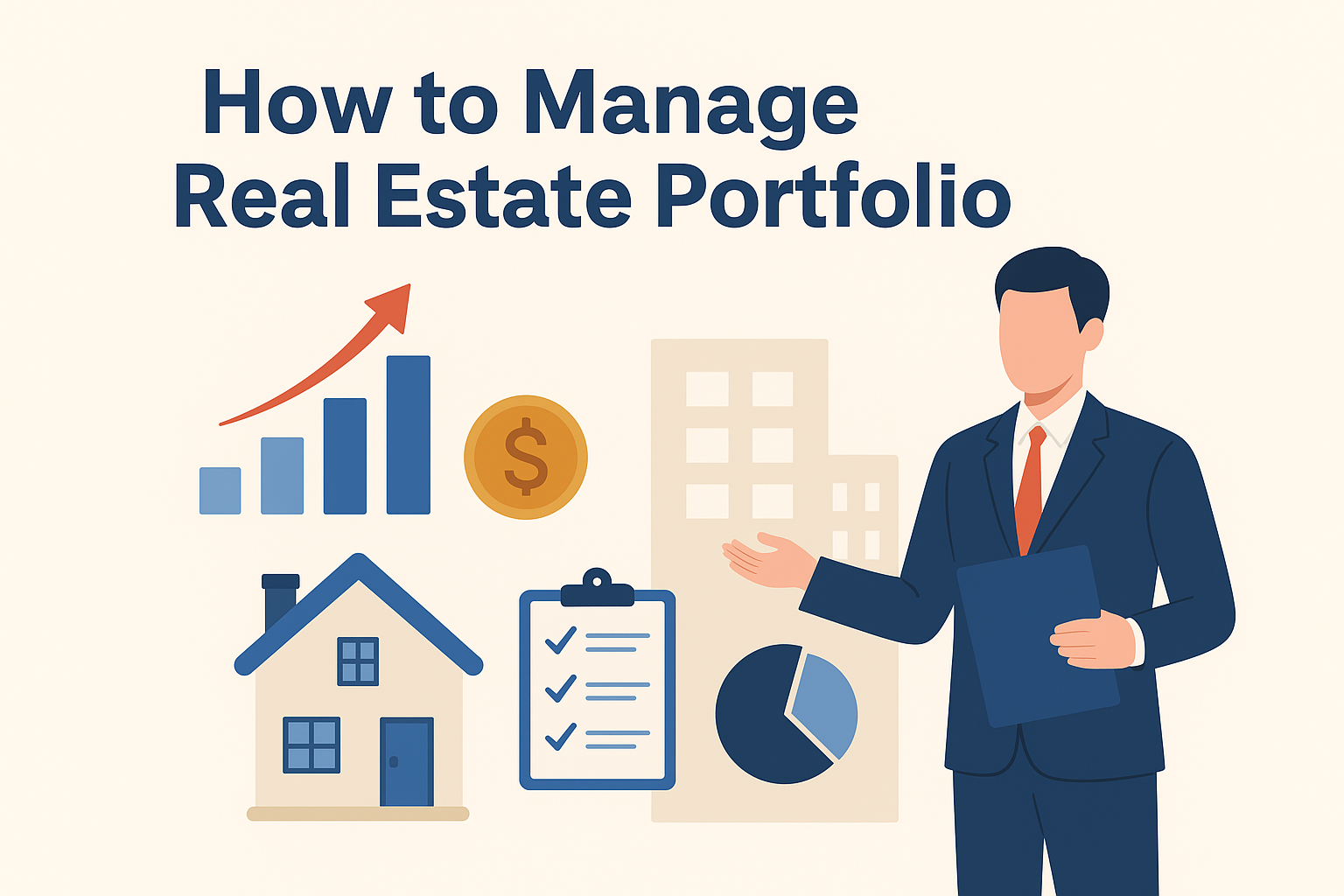
Managing a real estate portfolio is more than just buying and holding properties—it’s about creating a structured system to monitor performance, maximize returns, and minimize risks. Whether you own residential rentals, commercial properties, or a mix of both, effective portfolio management ensures your investments continue to grow sustainably. A well-managed portfolio gives you financial stability, better decision-making power, and long-term wealth-building opportunities.
Many investors underestimate the need for a proper management framework. They assume properties will automatically generate profit once purchased, but without regular evaluation and strategic planning, even the best properties can underperform. That’s why understanding how to manage real estate portfolio becomes essential in today’s competitive market. With the right approach, your portfolio can outperform the market averages and deliver consistent returns year after year.
1. Set Clear Investment Goals (200–300 words, split in two)
Before you begin managing your real estate portfolio, the first step is to define your investment goals clearly. Ask yourself what you want to achieve—steady rental income, long-term appreciation, tax benefits, or a mix of all three. Different goals require different types of properties and management strategies. For instance, if your primary objective is cash flow, you should focus on rental properties in high-demand areas. But if long-term appreciation is your priority, emerging neighborhoods might be more suitable.
Once your goals are in place, you can design your portfolio strategy around them. This includes selecting the right property types, assessing risk levels, estimating expected returns, and setting timelines. Clear goals act as a roadmap and help you stay disciplined in your investment approach. Without them, your decisions may become scattered and emotionally driven, leading to inconsistent results. Goal-setting ensures you are always aligned with your long-term vision.
2. Diversify Your Property Types and Locations
Diversification is one of the most important principles when learning how to manage real estate portfolio effectively. A diversified portfolio reduces risk because it prevents your entire investment from being affected by a downturn in one area or property type. Consider spreading your investments across residential, commercial, and mixed-use properties. You can also diversify by owning properties in different neighborhoods or even different cities and states.
Geographical diversification is especially powerful because real estate markets do not move uniformly. One city may experience rapid growth while another slows down. By spreading your investments, you gain stability and increase the chances of steady returns. Diversification helps protect your income stream and ensures your portfolio remains strong even during economic fluctuations. It is one of the smartest strategies for long-term success.
3. Maintain Strong Financial Planning and Cash Flow Management
Financial planning forms the backbone of successful portfolio management. You must keep track of rental income, expenses, mortgage payments, maintenance costs, and taxes. Creating a budget for each property allows you to understand your actual returns and make informed decisions. Cash flow management is equally important; always ensure you have enough reserves for emergencies, repairs, or unexpected vacancies. A property may look profitable on paper, but without proper cash flow planning, it can quickly turn into a burden.
Many investors rely on financial software or professional accountants to manage their books efficiently. Keeping your financial data organized also helps during refinancing, loan applications, or tax assessments. Good financial planning allows you to spot underperforming assets early and gives you clear visibility on profitability. This is a key component of mastering how to manage real estate portfolio the right way.
4. Monitor Property Performance Regularly
Evaluating your property’s performance is crucial for making sure your portfolio stays profitable. Track key metrics like cash-on-cash return, cap rate, occupancy rate, and net operating income (NOI). Compare the performance of each property with your expectations and market benchmarks. If a property consistently underperforms, it may be time to renovate, increase rent, adjust marketing strategies, or even consider selling.
Regular performance monitoring helps you identify trends and spot problems before they escalate. For example, rising vacancies may indicate poor tenant satisfaction or a shift in local demand. By analyzing these patterns early, you can make strategic adjustments and prevent major financial losses. Consistent evaluation keeps your portfolio healthy and aligned with your long-term goals.
5. Keep Properties Well-Maintained
Property maintenance is directly linked to your rental income and long-term profitability. Well-maintained properties attract quality tenants, reduce vacancy rates, and minimize repair costs. Create a maintenance schedule to inspect essential systems such as plumbing, electrical, heating, and roofing. Preventive maintenance is far more cost-effective than dealing with major breakdowns, and it keeps your properties in top condition.
Additionally, regular upgrades—like new flooring, fresh paint, or energy-efficient appliances—can increase your property value and allow you to charge higher rent. Good maintenance also leads to higher tenant satisfaction, resulting in longer stays and lower turnover. Maintaining your property asset is a fundamental part of understanding how to manage real estate portfolio with professionalism and efficiency.
6. Use Technology to Streamline Management
Modern real estate management has become much easier thanks to technology. There are tools for tenant screening, rent collection, accounting, maintenance tracking, and financial analysis. Property management apps allow you to automate rent reminders, monitor payments, and maintain detailed records—all from your phone or laptop. Using technology helps you save time, reduce manual errors, and improve communication with tenants.
Real estate analytics tools also provide valuable insights into market trends, helping you make smarter investment decisions. Whether you manage five properties or fifty, technology reduces workload and enhances efficiency. It keeps your portfolio organized and gives you more control over your long-term investment strategy.
7. Work With Professionals When Needed
Even experienced investors seek help from professionals like property managers, real estate agents, accountants, and legal advisors. Hiring a property manager can save you time and stress by handling tenant issues, rent collection, inspections, and maintenance. A professional accountant ensures accurate financial records and helps you optimize tax benefits.
Real estate attorneys are useful for drafting contracts, resolving disputes, and ensuring compliance with local regulations. Working with experts not only improves portfolio performance but also reduces your risk exposure. Even if you prefer a hands-on approach, professional support ensures your investments stay legally and financially secure.
8. Rebalance Your Portfolio Periodically
Just like stock portfolios, real estate portfolios also need rebalancing. This means reviewing your holdings and adjusting them to match your long-term goals. Sometimes, you may need to sell underperforming properties and reinvest the money into better opportunities. You may also shift from residential to commercial properties or expand into new markets.
Rebalancing ensures your portfolio remains aligned with your evolving financial goals. It also allows you to optimize returns and reduce risks. Reviewing your portfolio once or twice a year keeps your strategies fresh and relevant, helping you stay ahead of market changes.
Conclusion: Mastering How to Manage Real Estate Portfolio
Managing a real estate portfolio is a continuous journey that requires planning, monitoring, and strategic decision-making. From setting goals and diversifying property types to maintaining properties and leveraging technology, every step plays an important role in building long-term wealth. Understanding how to manage real estate portfolio empowers you to maximize returns while reducing risks.
With the right approach, discipline, and tools, your real estate investment journey can become more predictable, profitable, and secure. Whether you’re a beginner or an experienced investor, strong portfolio management is the key to lasting financial success in real estate.