Introduction: Understanding the Core Difference
Investing has evolved from being a niche activity for financial experts to a mainstream necessity for wealth creation. Today, individuals are faced with a critical choice—whether to manage their investments independently or opt for professional solutions like Portfolio Management Services. This decision becomes even more important as markets grow more complex, volatile, and information-driven. Both approaches aim to generate returns, but the path, effort, and risk involved can differ significantly.
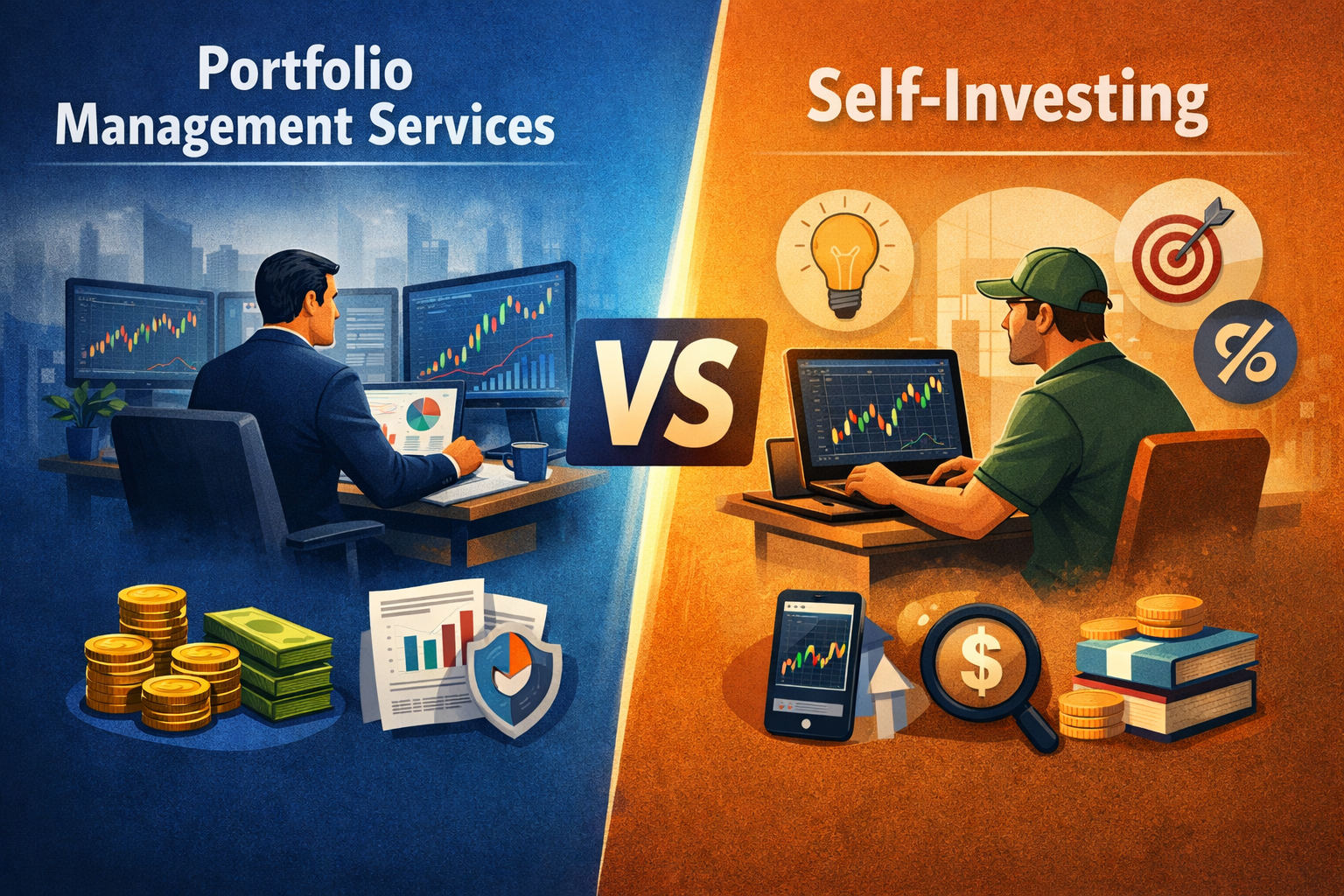
Portfolio Management Services are designed for investors who want professional expertise, structured strategies, and disciplined execution. On the other hand, self-investing appeals to individuals who prefer control, flexibility, and hands-on involvement in their financial decisions. Each method has its own advantages and limitations, and the “better” option largely depends on an investor’s knowledge, time availability, risk tolerance, and financial goals.
In this blog, we will take a deep dive into Portfolio Management Services vs self-investing, comparing them across critical parameters such as expertise, risk management, costs, emotional discipline, returns, and suitability. By the end, you’ll have a clear understanding of which approach aligns better with your investment journey and long-term wealth creation strategy.
What Are Portfolio Management Services?
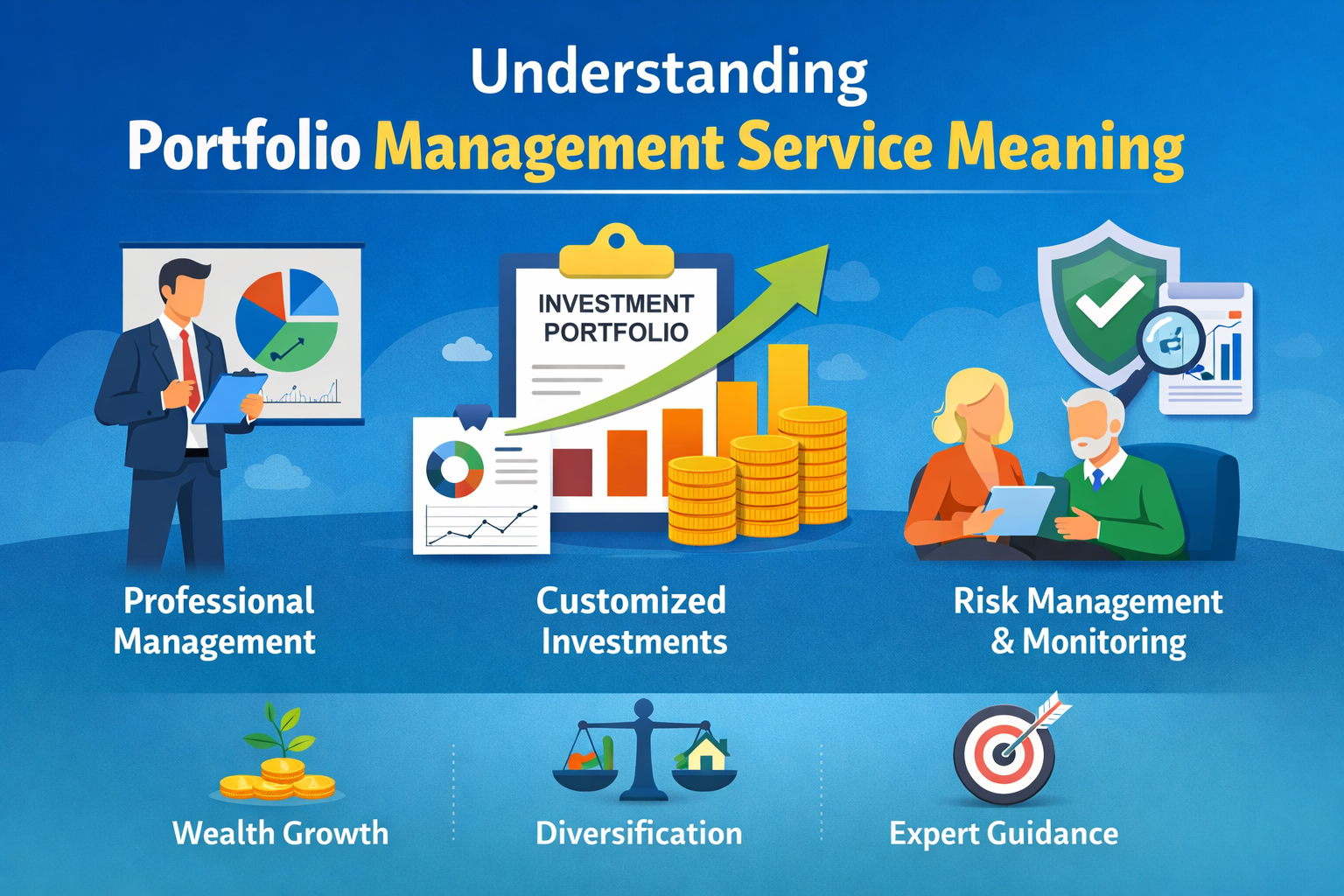
Portfolio Management Services refer to a professional investment solution where a qualified portfolio manager manages your investments on your behalf. These services typically cater to high-net-worth individuals who want personalized investment strategies rather than generic mutual fund products. The portfolio is constructed based on your financial goals, risk appetite, investment horizon, and market conditions, ensuring a customized approach.
Under Portfolio Management Services, investment decisions such as stock selection, asset allocation, rebalancing, and risk control are handled by experienced professionals. These managers rely on in-depth research, market analysis, and data-driven insights to optimize returns. In India, PMS providers are regulated by the Securities and Exchange Board of India, which ensures transparency, compliance, and investor protection.
Unlike mutual funds, PMS portfolios are held in the investor’s own demat account, offering full visibility into holdings and transactions. This structure allows for greater customization and flexibility. However, PMS usually requires a higher minimum investment and charges management and performance-based fees, making it more suitable for investors seeking professional management and long-term capital appreciation.
What Is Self-Investing?
Self-investing is an approach where individuals independently research, select, and manage their investments without professional assistance. This method has gained popularity due to easy access to online trading platforms, financial news, and educational content. Investors can directly invest in stocks, mutual funds, ETFs, bonds, or other instruments based on their personal judgment and market understanding.
The biggest advantage of self-investing is control. Investors make their own decisions, decide when to buy or sell, and adjust their strategies as they see fit. There are also lower costs involved since there are no professional management or performance fees. For individuals with strong financial knowledge and the time to monitor markets regularly, self-investing can be both rewarding and empowering.
However, self-investing also comes with significant challenges. Emotional biases, lack of diversification, inconsistent strategies, and poor risk management often lead to suboptimal returns. Many retail investors struggle to beat the market consistently, especially during volatile phases. Without a structured framework and professional discipline, self-investing can become reactive rather than strategic, impacting long-term wealth creation.
Expertise and Decision-Making: Professional vs Individual
One of the most critical differences between Portfolio Management Services and self-investing lies in expertise. PMS providers employ experienced portfolio managers, analysts, and research teams who continuously track macroeconomic trends, sector performance, company fundamentals, and valuation metrics. Their decisions are backed by data, models, and years of market experience.
This professional approach reduces guesswork and increases the probability of making informed decisions, especially during uncertain market conditions. Portfolio Management Services also follow predefined investment philosophies and risk frameworks, ensuring consistency and discipline. Investors benefit from strategic asset allocation, timely rebalancing, and professional oversight that is difficult to replicate individually.
In contrast, self-investors rely on their personal knowledge, intuition, and available information. While some individuals develop strong investing skills over time, many are influenced by market noise, social media tips, or short-term trends. Limited access to advanced research tools and lack of experience can lead to emotional decision-making. This gap in expertise often becomes evident during market corrections, where professional management tends to outperform impulsive retail behavior.
Risk Management and Emotional Discipline
Effective risk management is a cornerstone of successful investing, and this is where Portfolio Management Services often have a clear advantage. PMS providers use structured risk assessment models, diversification strategies, and predefined exit rules to protect capital. They focus not only on generating returns but also on minimizing downside risk across market cycles.
Professional portfolio managers are trained to remain objective and disciplined, even during periods of extreme volatility. They avoid panic selling and speculative buying, instead relying on long-term strategies and data-backed decisions. This emotional discipline plays a crucial role in preserving wealth and ensuring consistent performance over time.
Self-investors, however, are more susceptible to emotional biases such as fear, greed, and overconfidence. Market crashes often trigger panic selling, while bull markets encourage excessive risk-taking. Without a systematic risk management framework, individual investors may hold concentrated positions or fail to rebalance portfolios. Over time, these behavioral mistakes can significantly erode returns, even if the initial investment thesis was sound.
Cost Structure and Transparency
Cost is often cited as a deciding factor when comparing Portfolio Management Services with self-investing. PMS typically charges a fixed management fee, a performance-based fee, or a combination of both. While these costs may seem high, they cover professional expertise, research, portfolio monitoring, and personalized investment strategies.
Importantly, PMS offers transparency in holdings and transactions since investments are held in the investor’s own demat account. Investors know exactly where their money is allocated and can track performance in real time. For those seeking professional oversight and accountability, the cost is often justified by the value delivered.
Self-investing, on the other hand, involves minimal costs such as brokerage fees and taxes. There are no management charges, making it appealing to cost-conscious investors. However, lower costs do not always translate into higher net returns. Poor investment decisions, lack of diversification, and missed opportunities can outweigh the savings on fees. In many cases, the hidden cost of mistakes in self-investing exceeds the visible fees of professional management.
Return Potential and Consistency
When evaluating Portfolio Management Services vs self-investing, return consistency is more important than short-term gains. PMS aims to deliver risk-adjusted returns over the long term by following disciplined strategies and adapting to changing market conditions. While no investment approach guarantees profits, professional management increases the likelihood of stable and sustainable growth.
Portfolio Management Services focus on long-term wealth creation rather than speculative returns. By identifying quality businesses, managing allocations, and timing exits strategically, PMS portfolios often perform better across full market cycles. This consistency is particularly valuable for investors with large capital and long-term financial goals.
Self-investing can sometimes generate higher returns, especially when investors make timely and informed decisions. However, such success is often inconsistent and difficult to sustain. Many self-investors experience periods of strong performance followed by significant losses. Without a repeatable strategy and disciplined execution, long-term return consistency remains a major challenge in self-investing.
Which Option Is Better for You?
The choice between Portfolio Management Services and self-investing ultimately depends on your personal circumstances. If you lack the time, expertise, or emotional discipline to manage investments actively, PMS can be an excellent solution. It allows you to delegate responsibility to professionals while focusing on your career, business, or personal life.
Portfolio Management Services are particularly suitable for investors with higher capital, long-term horizons, and a preference for structured, research-driven strategies. The personalized nature of PMS makes it ideal for goal-based investing such as retirement planning, wealth preservation, or legacy creation.
Self-investing may be better suited for individuals who enjoy market analysis, have strong financial knowledge, and are willing to dedicate time to continuous learning. It offers flexibility and cost savings but demands discipline and accountability. For many investors, a hybrid approach—using PMS for core investments and self-investing for learning or tactical opportunities—can offer the best of both worlds.
Final Verdict: Portfolio Management Services or Self-Investing?
There is no one-size-fits-all answer to the debate between Portfolio Management Services and self-investing. Both approaches have their merits, and the right choice depends on your goals, risk appetite, and involvement level. However, for investors seeking professional expertise, disciplined execution, and long-term consistency, Portfolio Management Services often emerge as the more reliable option.
Self-investing can be rewarding, but it requires continuous effort, emotional control, and deep market understanding. Without these, the risk of underperformance is high. PMS, while more expensive, provides structure, accountability, and peace of mind—qualities that are invaluable in volatile markets.
Ultimately, the best investment strategy is one that aligns with your financial objectives and allows you to stay invested confidently over the long term. Choosing wisely between Portfolio Management Services and self-investing can make a significant difference in your wealth creation journey.