Introduction: Understanding the Need for Lean Portfolio Management
Lean Portfolio Management (LPM) has emerged as a crucial discipline for organizations striving to stay competitive, innovative, and efficient in today’s dynamic market environment. Traditional portfolio management systems often struggle because they rely heavily on fixed annual planning, rigid budgeting, and slow decision cycles. As a result, they fail to keep pace with changing customer needs, shifting market conditions, and rapid technological evolution. This is where Lean Portfolio Management becomes transformative. It introduces an agile, flexible, and value-focused way of managing portfolios, ensuring teams stay aligned with strategic goals while continuously delivering customer value. In essence, LPM is an approach that connects strategy to execution while eliminating waste, maximizing productivity, and improving overall business outcomes.
Companies implementing Lean Portfolio Management often find that it reduces unnecessary bureaucracy and improves collaboration across departments. By introducing transparency, continuous planning, and real-time insights, LPM enables leaders to make faster, data-driven decisions. Unlike traditional methods that rely on extensive documentation and approvals, the lean approach emphasizes incremental progress, value streams, and measurable outcomes. As businesses continue to adopt Agile and DevOps practices, Lean Portfolio Management becomes the missing link that connects executive strategy with delivery teams. Understanding what is lean portfolio management is essential for leaders seeking to modernize their processes and embrace a more adaptive operational model.
What Is Lean Portfolio Management?
Lean Portfolio Management refers to a modern approach to managing an organization’s strategic initiatives, investments, and value streams through agile principles and lean thinking. It focuses on aligning business objectives with execution by breaking down work into smaller, manageable components and continuously evaluating priorities. LPM ensures that investments are made in the right places, resources are allocated effectively, and teams remain focused on delivering maximum customer value. Instead of managing projects through traditional rigid budgets, Lean Portfolio Management emphasizes a more fluid and adaptive process that adjusts to market and customer feedback. It integrates strategy, governance, and funding into one coherent system designed to support innovation and continuous improvement.
At its core, LPM aims to eliminate waste, streamline processes, and encourage cross-functional collaboration. This means organizations shift from managing tasks to managing outcomes, using real-time data to guide decisions. When companies adopt Lean Portfolio Management, they gain the ability to inspect progress regularly, pivot strategies quickly, and empower teams to make decisions. This significantly improves delivery speed and ensures that efforts are always aligned with the company’s most important goals. Ultimately, Lean Portfolio Management creates a culture where innovation thrives, teams remain motivated, and organizational growth becomes sustainable and predictable. This holistic framework enables businesses to plan strategically while staying responsive to change—making it the best answer to what is lean portfolio management in the modern business world.
Key Principles of Lean Portfolio Management
The first key principle of Lean Portfolio Management is strategy alignment. LPM ensures every team, project, and initiative contributes directly to the organization’s overall vision. Instead of working in silos, teams operate within defined value streams that focus on delivering customer-centric outcomes. Another important principle is lean budgeting, which enables flexible funding rather than fixed annual plans. Lean budgets help leaders allocate resources where they are most effective, adjust spending as priorities shift, and avoid wasteful expenditures. Continuous improvement is also central to LPM, encouraging teams to inspect their workflows regularly and identify opportunities for optimization. This fosters a mindset of learning, experimentation, and ongoing refinement.
The second principle emphasizes transparency and decentralized decision-making. Lean Portfolio Management promotes visual management tools, such as Kanban boards and dashboards, to provide real-time visibility into ongoing work and performance metrics. This allows leaders to identify bottlenecks early and make informed decisions promptly. Decentralized decision-making empowers teams by giving them autonomy to address challenges quickly without waiting for top-down approvals. Finally, Lean Portfolio Management thrives on empirical data. By using metrics such as lead time, flow efficiency, and cost of delay, leaders can evaluate which initiatives deliver the highest value. Together, these principles form the foundation of LPM, helping organizations transform their strategy execution while enhancing agility and innovation.
Benefits of Lean Portfolio Management
One of the biggest benefits of Lean Portfolio Management is improved strategic alignment. With LPM, organizations gain clarity on which projects support their objectives and which do not. This ensures resources are only used where they generate real value, preventing misalignment and wastage. In addition, LPM boosts efficiency by simplifying workflow processes and eliminating unnecessary bureaucracy. Teams experience less delay, fewer bottlenecks, and a faster time-to-market. Another major benefit is enhanced adaptability. Since LPM supports continuous planning, companies can shift priorities easily based on market demands, customer behavior, or new technological trends. This flexibility is vital for businesses competing in fast-paced environments where traditional planning methods fall short.
Moreover, Lean Portfolio Management strengthens collaboration across teams and departments. By encouraging transparency and decentralized decision-making, LPM empowers teams to take ownership of their work and stay motivated. The use of value streams ensures that everyone understands how their work contributes to the organization’s goals. Additionally, LPM promotes a culture of innovation by allowing experimentation and learning from failure. Financial efficiency also improves because lean budgeting prevents overspending and ensures money flows toward the most valuable initiatives. Overall, the benefits of Lean Portfolio Management extend beyond operational improvements—they help create a smarter, more resilient organization poised for long-term success.
How Lean Portfolio Management Works in Organizations
Lean Portfolio Management works by dividing business functions into value streams rather than traditional departments. Each value stream represents a series of activities that deliver value to customers. Leaders then assign budgets to these value streams, giving teams the flexibility to decide how the funds should be used within their domain. This reduces bottlenecks caused by centralized decision-making and allows faster execution. Another key component is the use of portfolio kanban systems, which visualize all ongoing and planned initiatives. This ensures transparency, helps teams prioritize effectively, and creates a smooth workflow. Continuous planning cycles are also implemented, replacing rigid annual planning with ongoing evaluation and adjustment.
In addition to restructuring processes, Lean Portfolio Management also emphasizes outcome-based performance measurement. Teams are evaluated based on value delivered rather than hours worked or tasks completed. Metrics like customer satisfaction, time-to-market, and innovation rate become benchmarks for success. Leadership plays a crucial role by setting strategic objectives and enabling decentralized decision-making. Governance becomes lighter and more adaptive, focusing on guiding principles rather than strict rules. When all these components work together—value streams, lean budgets, kanban systems, and continuous planning—organizations experience a seamless connection between strategy and execution. This ensures they stay competitive while producing high-quality products and services.
Key Components of Lean Portfolio Management
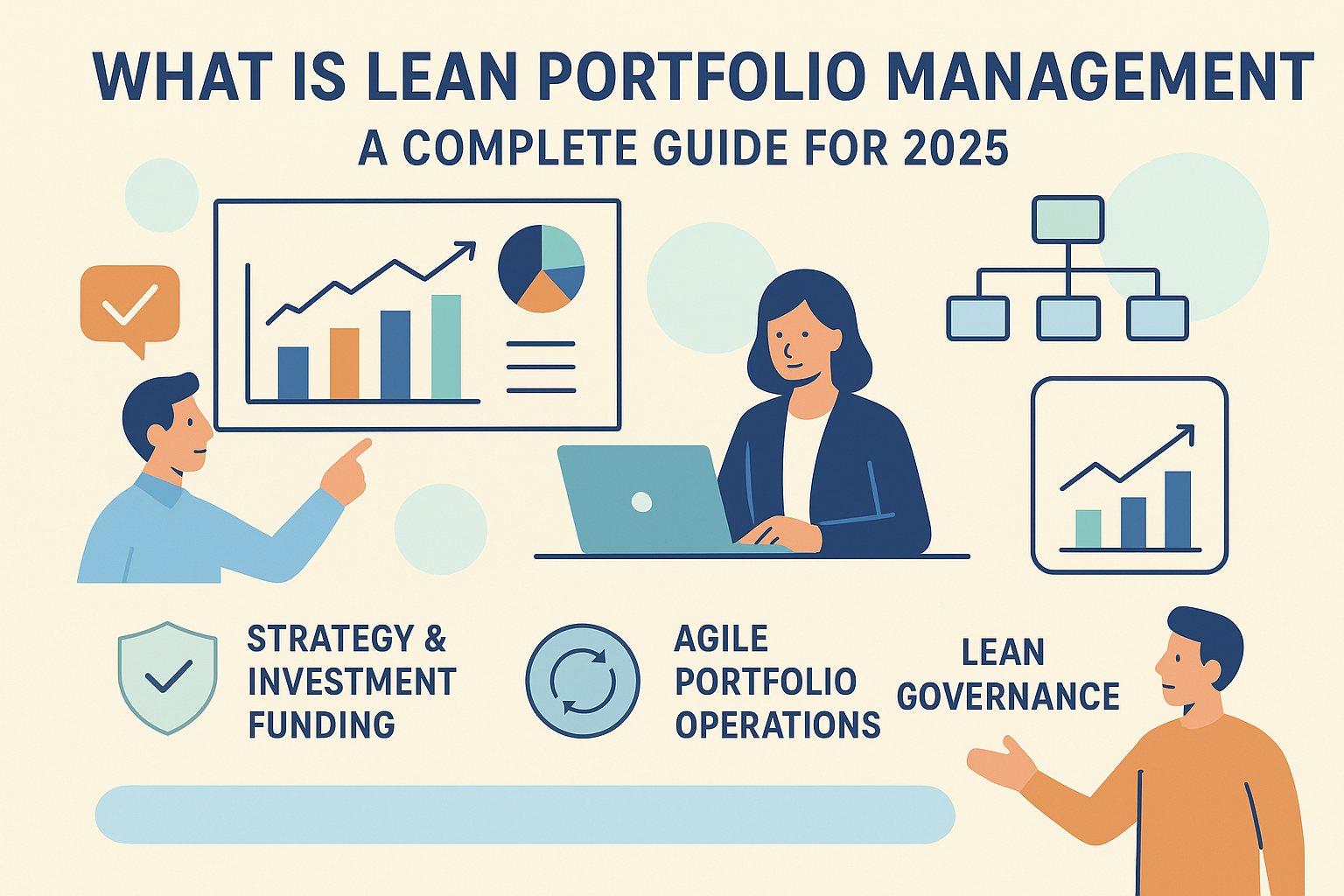
Lean Portfolio Management consists of three core components: Strategy & Investment Funding, Agile Portfolio Operations, and Lean Governance. Strategy & Investment Funding involves setting business priorities and allocating resources to initiatives that align with strategic goals. Instead of assigning funds to individual projects, LPM allocates budgets to value streams, ensuring more flexibility. Agile Portfolio Operations focuses on coordinating and optimizing workflow across teams. It encourages continuous planning, real-time collaboration, and the use of portfolio kanban systems for transparency. This keeps everyone aligned while minimizing bottlenecks and delays.
Lean Governance ensures compliance, risk management, and performance tracking while maintaining agility. Unlike traditional governance that relies on heavy documentation and rigid rules, lean governance emphasizes trust, transparency, and adaptive controls. It prioritizes measurable outcomes over processes and supports decentralized decision-making. Another important component is metrics and analytics, which help leaders evaluate performance and make data-driven decisions. Together, these components create a holistic system that enhances speed, innovation, and organizational alignment. Understanding these elements is essential for businesses seeking to implement Lean Portfolio Management effectively and unlock maximum benefits.
Why Lean Portfolio Management Matters Today
In today’s digital-first world, organizations face rapid technological advancements, unpredictable market shifts, and increasing customer expectations. Traditional portfolio management systems cannot keep up because they depend on rigid planning cycles and slow approvals. Lean Portfolio Management, however, offers a flexible and adaptive approach that matches the speed of modern business. It enables companies to respond quickly to changes, experiment with new ideas, and deliver continuous value. Businesses across industries—from technology and finance to manufacturing and healthcare—are adopting LPM to remain competitive and innovative. It helps leaders bridge the gap between strategy and execution, ensuring alignment at every level.
Furthermore, Lean Portfolio Management supports the growing adoption of Agile and DevOps methodologies. As organizations break down silos and digitize their operations, they require a portfolio management system that complements their agile practices. LPM provides this alignment by focusing on value streams, continuous flow, and dynamic funding models. It encourages a culture of empowerment, accountability, and innovation—qualities essential for thriving in today’s landscape. Ultimately, Lean Portfolio Management matters because it transforms organizational behavior, supports long-term growth, and ensures teams deliver the highest value with the least waste.
Conclusion On What Is Lean Portfolio Management
Lean Portfolio Management is more than just a method—it is a mindset shift that empowers organizations to become faster, smarter, and more customer-centric. By understanding what is lean portfolio management, businesses can align their strategies with execution, allocate resources efficiently, and build a culture of continuous improvement. LPM offers all the tools necessary to navigate uncertainty, embrace innovation, and achieve consistent growth.
As digital transformation continues to shape industries, Lean Portfolio Management stands as a foundational approach for organizations seeking long-term success. Its principles of lean thinking, agile practices, and value-driven decision-making make it one of the most effective portfolio management frameworks today. Companies that adopt LPM are better equipped to adapt, innovate, and lead in a rapidly changing environment—making it an essential strategy for the future.