Product portfolio management (PPM) is a powerful strategic discipline that helps companies analyze, manage, and optimize their entire lineup of products. Instead of looking at each product separately, businesses use PPM to evaluate how all products perform together, how they align with long-term goals, and which ones deserve more investment. This ensures that resources, time, and budgets are allocated effectively to maximize profitability. Many companies, especially in competitive industries, rely on PPM to prevent losses, improve efficiency, and identify new growth opportunities.
In today’s fast-moving digital economy, managing a product portfolio has become more important than ever. Customer needs evolve quickly, new competitors emerge every day, and product life cycles are becoming shorter. With a structured PPM approach, organizations can easily decide which products to scale, modify, retire, or replace. This not only boosts revenue but also helps leaders make informed decisions based on real data. Whether you’re a startup founder, product manager, or business owner, understanding what product portfolio management is can redefine the way you plan your product roadmap.
What Is Product Portfolio Management?
Product portfolio management refers to the process of evaluating and overseeing a company’s complete range of products. This includes new, existing, and even upcoming products. The purpose is to monitor performance, identify risks, analyze profitability, and ensure that every product supports the company’s overall business strategy. By understanding the position of each product in the market, companies avoid unnecessary financial burden and focus their energy on what truly matters.
In simple terms, PPM acts as a bridge between market demand and business goals. Instead of relying on guesswork or instincts, companies use data-driven insights to decide which products deserve investment. A well-managed product portfolio highlights which offerings are high performers, which ones need improvement, and which should be discontinued. This strategic clarity not only improves product success but also strengthens the company’s competitive edge.
Why Product Portfolio Management Matters
Product portfolio management matters because it gives businesses a clear view of how each product contributes to growth, revenue, and brand positioning. Without PPM, companies may end up wasting resources on low-performing products while ignoring high-potential ones. It becomes difficult to forecast business growth or respond to market shifts efficiently. With proper PPM, leaders gain better control over product strategy and make decisions backed by analytics rather than assumptions.
Another reason PPM is crucial is its role in risk management. Markets are unpredictable, and customer preferences can change suddenly. PPM helps companies reduce risk by balancing products across different stages of the product life cycle. For example, while mature products generate steady income, new products drive innovation and future growth. This balance ensures business stability and long-term success.
Key Components of Product Portfolio Management
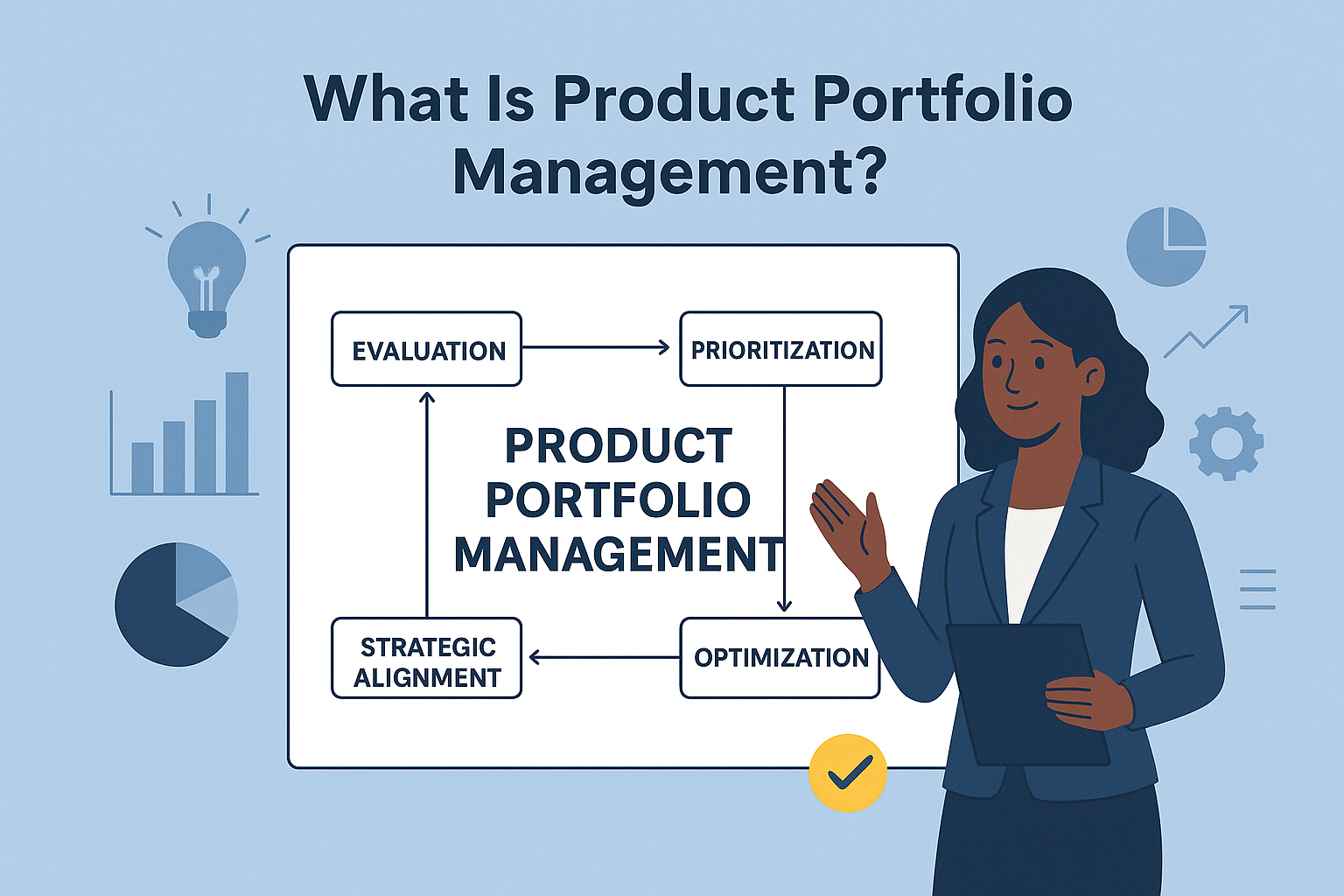
The first essential component is product evaluation, where companies analyze individual product performance using metrics like revenue, customer satisfaction, demand patterns, and market trends. This step helps businesses compare products against each other and identify which ones require attention. Along with evaluation comes prioritization, where management decides which products should receive more investment to maximize returns. This structured prioritization keeps the entire portfolio aligned with business goals.
Another important component is strategic alignment, ensuring that every product supports the company’s long-term vision. This prevents teams from launching or maintaining products that do not add value. Finally, portfolio optimization involves continuous monitoring, product enhancement, and removing non-performing items. Together, these components help organizations maintain a healthy, balanced, and profitable product portfolio.
Benefits of Product Portfolio Management
One of the biggest benefits of product portfolio management is improved decision-making. With clear, data-backed insights, companies can avoid emotional or biased decisions. Instead, they focus on objective metrics that highlight which products matter most. This clarity saves time and money while improving product success rates. It also encourages innovation by identifying gaps where new product ideas can flourish.
Another benefit is enhanced profitability. By analyzing product performance regularly, companies can increase investments in high-performing products and eliminate those draining resources. This leads to higher revenue, better customer satisfaction, and stronger market positioning. PPM also gives organizations the flexibility to adapt quickly to changes, ensuring they stay ahead of competitors. When companies manage their product portfolio effectively, they experience sustainable growth with fewer risks.
How Product Portfolio Management Works
Product portfolio management works by combining data analytics, market research, and strategic planning. Teams begin by collecting data about each product’s performance—this includes sales numbers, customer feedback, lifecycle position, and competitor analysis. Once the data is collected, companies compare products to identify strong and weak performers. This evaluation forms the foundation for future decisions.
The next step involves categorizing products into groups such as high-growth, stable, risky, or declining. After categorization, leaders decide which products to improve, discontinue, or expand. This stage often includes financial forecasting, customer segmentation, and resource planning. Over time, companies continuously monitor and adjust their portfolio based on updated market conditions. The cycle repeats to maintain relevance, competitiveness, and profitability across all products.
Tools Used in Product Portfolio Management
Product portfolio management relies on various tools that help visualize, analyze, and manage product data. Some of the most popular tools include the BCG Matrix, which categorizes products as Stars, Cash Cows, Question Marks, or Dogs. This tool helps companies understand where to invest and where to cut back. Another useful tool is the Ansoff Matrix, which helps businesses explore growth opportunities through market penetration, market development, product development, and diversification.
Modern product teams also use digital tools like Jira, Aha!, Monday.com, and Productboard to organize data, track product performance, and plan roadmaps. These platforms simplify collaboration between product teams, marketing, sales, and leadership. With the help of dashboards, charts, and real-time reporting, companies gain complete visibility into the health of their product portfolio. As a result, decision-making becomes more efficient and predictable.
Challenges in Product Portfolio Management
Managing a product portfolio comes with several challenges. One of the biggest obstacles is collecting accurate and timely data. Without reliable performance metrics, companies often make decisions based on incomplete information. Another challenge is internal conflict—different departments may have different priorities, making it difficult to agree on which products deserve investment. This misalignment can slow down decision-making and impact growth.
Another challenge is dealing with market uncertainty. Customer preferences, technological changes, and competitive pressures can affect product performance. Companies must constantly update their strategies to stay relevant. Finally, managing a diverse portfolio with multiple products at different life cycle stages can be overwhelming. As the number of products grows, decision-making becomes more complex, requiring structured processes and strong leadership.
Best Practices for Effective Product Portfolio Management
To manage product portfolios effectively, companies should start with clear goals. This means defining what success looks like—whether it’s revenue growth, market expansion, or innovation. Once the goals are set, teams can evaluate each product against measurable KPIs. Another best practice is maintaining transparency across departments so everyone understands why certain decisions are made. This collaboration reduces conflicts and speeds up the decision-making process.
Continuous monitoring is another essential practice. Markets change fast, so companies must evaluate portfolio performance regularly. Using modern tools and automated dashboards helps track real-time metrics efficiently. Finally, organizations should be flexible and willing to update their product roadmap based on new insights. By adopting these best practices, businesses can improve profitability, manage risks, and stay ahead of competitors.
Conclusion On What Is Product Portfolio Management
Product portfolio management is a critical element of modern business strategy. It gives companies a clear view of all their products and helps them make smarter, data-driven decisions. By analyzing product performance, aligning strategies, and optimizing resources, PPM helps businesses reduce risk and achieve sustainable growth. In competitive markets, no company can afford to overlook the importance of a structured product portfolio.
When done correctly, PPM becomes a long-term asset that transforms product development, increases revenue, and strengthens customer relationships. Whether you’re a small business or a large enterprise, adopting PPM can help you stay organized, competitive, and future-ready. Now that you understand what product portfolio management is, you can use this guide to plan strategies that maximize your product success.