Introduction: Understanding the Real Purpose of a Project Portfolio Manager
A project portfolio manager plays a crucial role in an organization by ensuring that all ongoing and proposed projects align with business goals, deliver measurable value, and use resources effectively. Unlike a traditional project manager who focuses on a single project, a project portfolio manager oversees a collection of projects, making high-level decisions about which projects should be prioritized, delayed, funded, or stopped entirely. Their core responsibility revolves around maximizing business outcomes while minimizing risks and waste, ultimately helping companies operate more efficiently and competitively.
At its heart, the goal of a project portfolio manager is to maintain the right balance of projects that support long-term vision and short-term business performance. They evaluate the potential ROI of each project, assess the risks involved, and ensure that the available resources—such as budget, manpower, and technology—are allocated wisely. This strategic oversight allows companies to avoid overextending themselves and ensures that every project contributes meaningfully to organizational success.
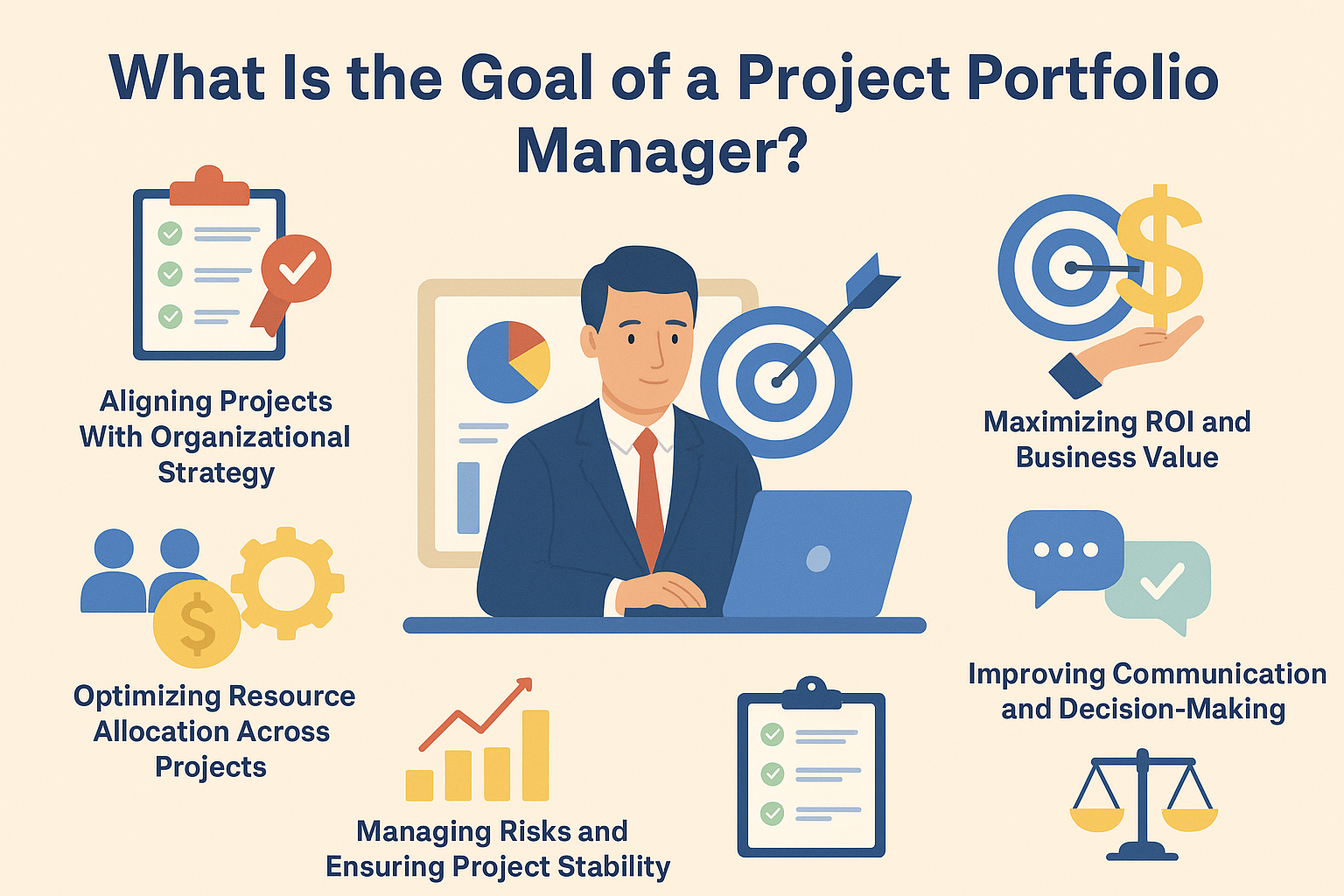
Goal 1: Aligning Projects With Organizational Strategy
One of the primary goals of a project portfolio manager is to ensure that every project directly supports the company’s mission, vision, and strategic direction. Organizations often start multiple projects due to internal demand, pressure from stakeholders, or market trends, but not all projects hold strategic value. The portfolio manager identifies which projects contribute to long-term growth, competitive advantage, or customer satisfaction and filters out those that do not align with big-picture priorities. This strategic filtering prevents the business from wasting time and investment on low-impact initiatives.
By continuously reviewing corporate goals, market changes, and internal capabilities, the project portfolio manager ensures that the organization stays focused. They create a clear connection between business objectives and project execution, helping teams understand the purpose behind their work. This alignment not only boosts performance but also ensures that management remains confident in the company’s growth direction.
Goal 2: Optimizing Resource Allocation Across Projects
Another crucial goal of a project portfolio manager is the efficient distribution of organizational resources. Companies often face shortages of skilled manpower, technology, equipment, or financial capital. Without proper oversight, teams may end up competing for the same resources, causing delays and inefficiencies. The portfolio manager analyzes project needs and allocates resources based on priority, urgency, and expected business value. This ensures that no crucial project gets stalled due to poor planning or overlooked requirements.
Effective resource optimization also helps in avoiding burnout among employees and prevents overspending. When resources are allocated smartly, the organization can complete more projects successfully within the same budget and time constraints. Portfolio managers regularly adjust the resource plan based on project progress, risk factors, and shifting business demands, ensuring a balanced workload and steady workflow.
Goal 3: Managing Risks and Ensuring Project Stability
Risk management is another key goal of a project portfolio manager. With multiple projects running simultaneously, the chances of unexpected issues—financial, operational, or technical—are high. A portfolio manager identifies these risks early through continuous monitoring and ensures that the organization is prepared to handle potential setbacks. They categorize risks based on their severity and likelihood, creating mitigation strategies before problems escalate. This proactive approach helps businesses avoid project failures and financial losses.
Beyond handling risks, portfolio managers maintain stability across the project ecosystem. By evaluating interdependencies among projects, they ensure that delays or failures in one area do not impact others. Their ability to predict challenges, adjust timelines, and reallocate resources keeps the entire portfolio running smoothly and reduces overall organizational risk.
Goal 4: Maximizing ROI and Business Value
Every organization invests in projects expecting tangible or measurable results. The goal of a project portfolio manager is to maximize the return on these investments. They analyze how each project contributes to profitability, customer satisfaction, innovation, or market expansion. Projects that generate higher value are prioritized, while those with limited benefits are reevaluated or discontinued. This value-driven approach ensures that every dollar spent on a project helps the organization grow.
The portfolio manager also measures success through KPIs, performance reports, and financial forecasting. By comparing expected outcomes with final results, they help businesses refine their project selection strategies. Over time, this leads to better decision-making, stronger revenue growth, and a more competitive project pipeline.
Goal 5: Improving Communication and Decision-Making
Clear communication is essential for managing a large portfolio of projects. A project portfolio manager acts as a bridge between executives, project managers, stakeholders, and teams. They provide high-level reports, dashboards, and insights to ensure everyone understands project performance, risks, and priorities. This transparency removes confusion, keeps everyone informed, and speeds up decision-making at the leadership level.
Moreover, effective communication ensures that project teams remain aligned and motivated. The portfolio manager fosters collaboration, resolves conflicts, and ensures that issues are escalated to the right authorities. Improved communication leads to faster approvals, reduced delays, and better execution across all projects in the portfolio.
Goal 6: Ensuring Balanced Project Prioritization
Project prioritization is one of the most important tasks of a portfolio manager. Companies often struggle with deciding which projects should be completed first, especially when they all seem important. A portfolio manager evaluates each project based on cost, ROI, strategic impact, risk, and available resources. They then create a priority order that ensures the most valuable projects are completed at the right time.
This structured prioritization prevents bottlenecks and avoids running too many projects simultaneously. By balancing the portfolio, the manager ensures a steady flow of outcomes, improved cash flow, and consistent business growth.
Goal 7: Maintaining Continuous Improvement and Portfolio Performance
The last major goal of a project portfolio manager is to drive continuous improvement. They constantly review project performance, analyze what worked, and identify what needs better execution. This learning process helps in refining future project selection, planning, and execution strategies. Over time, it transforms the organization into a more mature, efficient, and data-driven business.
Continuous improvement also involves introducing new methodologies, tools, and best practices. Whether it’s agile frameworks, automation tools, or advanced reporting systems, portfolio managers ensure that teams stay updated and capable of delivering high-quality results. This long-term improvement helps organizations remain competitive and resilient.
Conclusion: Why the Role Matters More Than Ever
In today’s fast-changing business environment, the role of a project portfolio manager is essential for ensuring long-term success. Their goal goes beyond just completing projects—they focus on aligning business strategies, optimizing resources, reducing risks, and maximizing returns. With the right portfolio management approach, organizations can achieve greater efficiency, make smarter decisions, and invest in projects that deliver the highest value.
By understanding what is the goal of a project portfolio manager, businesses can appreciate the strategic importance of this role and how it contributes to growth, stability, and innovation. A skilled portfolio manager ensures that every project supports the bigger vision, leading to a stronger and more successful organization.